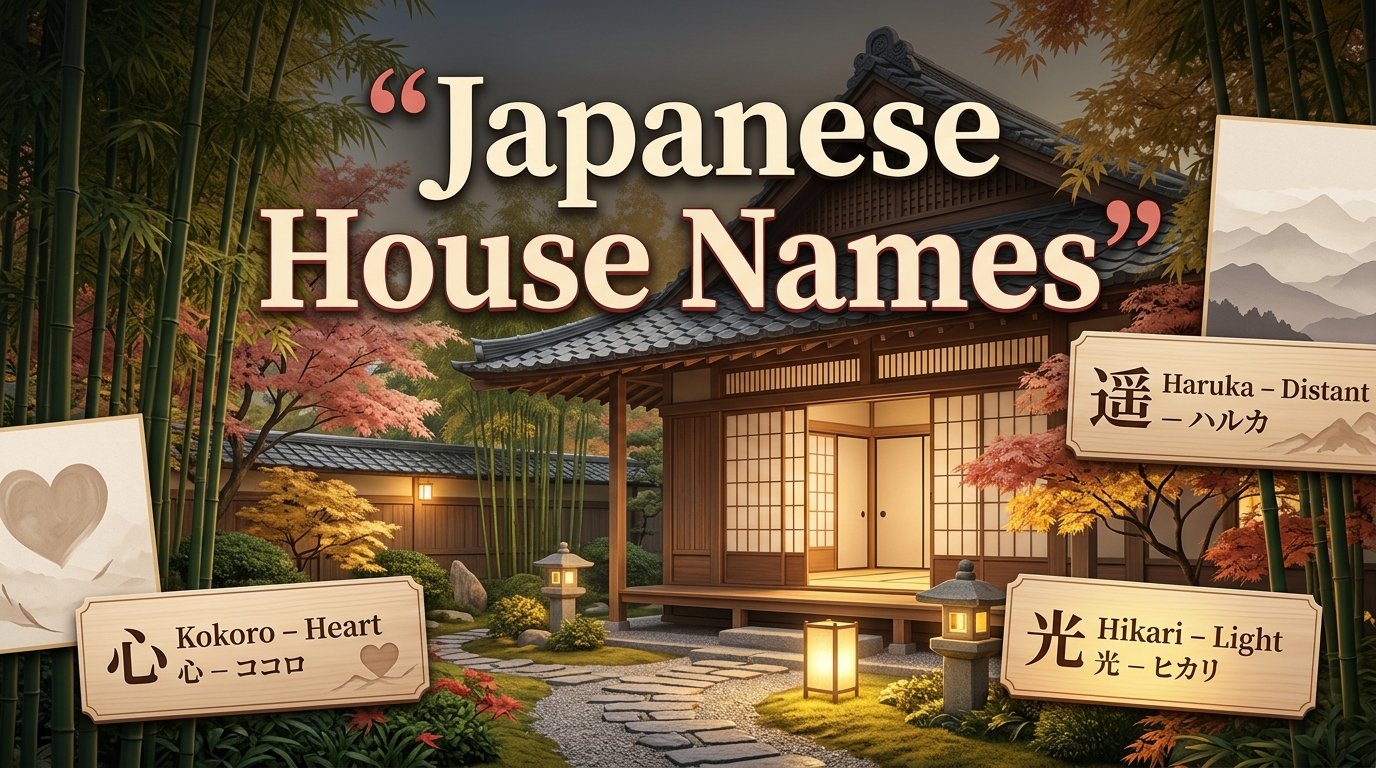
Ever notice how a house feels different once it has a name? That’s the magic behind Japanese house names. They turn a plain building into something personal. A simple word like “Tsuki” or “Sora” adds meaning to your front door. Japanese house names aren’t just labels. They tell a story. They carry hope, nature, or family values in just a few characters.
You don’t need to speak Japanese to love this idea. Japanese house names work for any home, anywhere. Pick one inspired by nature, like “forest” or “moonlight.” Pick one that means peace or strength. Japanese house names bring calm to modern spaces too. They fit tiny cottages and big estates alike. Once you learn a few Japanese house names, you’ll want one for your own home.
What Do Japanese House Names Really Mean?
Japanese house names aren’t random words. Each one carries a story, a feeling, or a wish for the people inside. From nature to emotion, these names turn ordinary walls into something personal and meaningful for everyone who lives there.
Yume
Meaning: Dream
Pronunciation: YOO-meh
Script: 夢
Hikari
Meaning: Light
Pronunciation: hee-KAH-ree
Script: 光
Sora
Meaning: Sky
Pronunciation: SOH-rah
Script: 空
Tsuki
Meaning: Moon
Pronunciation: TSOO-kee
Script: 月
Hana
Meaning: Flower
Pronunciation: HAH-nah
Script: 花
Mori
Meaning: Forest
Pronunciation: MOH-ree
Script: 森
Kaze
Meaning: Wind
Pronunciation: KAH-zeh
Script: 風
Umi
Meaning: Sea
Pronunciation: OO-mee
Script: 海
Hoshi
Meaning: Star
Pronunciation: HOH-shee
Script: 星
Yama
Meaning: Mountain
Pronunciation: YAH-mah
Script: 山
Midori
Meaning: Green
Pronunciation: mee-DOH-ree
Script: 緑
Nagomi
Meaning: Calm harmony
Pronunciation: nah-GOH-mee
Script: 和み
Shizuka
Meaning: Quiet, peaceful
Pronunciation: shee-ZOO-kah
Script: 静か
Ai
Meaning: Love
Pronunciation: EYE
Script: 愛
Kokoro
Meaning: Heart, spirit
Pronunciation: koh-KOH-roh
Script: 心
Fuyu
Meaning: Winter
Pronunciation: FOO-yoo
Script: 冬
Haru
Meaning: Spring
Pronunciation: HAH-roo
Script: 春
Natsu
Meaning: Summer
Pronunciation: NAH-tsoo
Script: 夏
Aki
Meaning: Autumn
Pronunciation: AH-kee
Script: 秋
Yuki
Meaning: Snow
Pronunciation: YOO-kee
Script: 雪
Nozomi
Meaning: Hope, wish
Pronunciation: noh-ZOH-mee
Script: 望み
Megumi
Meaning: Blessing
Pronunciation: meh-GOO-mee
Script: 恵み
Izumi
Meaning: Spring, fountain
Pronunciation: ee-ZOO-mee
Script: 泉
Sakura
Meaning: Cherry blossom
Pronunciation: sah-KOO-rah
Script: 桜
Take
Meaning: Bamboo
Pronunciation: TAH-keh
Script: 竹
Matsu
Meaning: Pine tree
Pronunciation: MAH-tsoo
Script: 松
Tsubaki
Meaning: Camellia flower
Pronunciation: tsoo-BAH-kee
Script: 椿
Kumo
Meaning: Cloud
Pronunciation: KOO-moh
Script: 雲
Hotaru
Meaning: Firefly
Pronunciation: hoh-TAH-roo
Script: 蛍
Asa
Meaning: Morning
Pronunciation: AH-sah
Script: 朝
The History and Tradition Behind Japanese House Names
Nature has always shaped Japanese naming traditions. Mountains, rivers, and seasons show up again and again. These names bring the outdoors inside, connecting your home to the natural world in a quiet, meaningful way.
Traditional names often lean on old suffixes and nature imagery, while contemporary names favor short, sleek sounds. Comparing the two shows how Japanese house naming traditions evolve while keeping their roots intact.
Kyuutei
Meaning: Old pavilion (traditional)
Pronunciation: kyoo-TEH
Script: 旧亭
Neo-an
Meaning: New hermitage (contemporary blend)
Pronunciation: NEH-oh-ahn
Script: 新庵
Kotenkan
Meaning: Classical hall
Pronunciation: koh-tehn-KAHN
Script: 古典館
Modan-tei
Meaning: Modern pavilion
Pronunciation: MOH-dahn-teh
Script: モダン亭
Kokoan
Meaning: Old hermitage
Pronunciation: KOH-koh-ahn
Script: 古庵
Shinsou
Meaning: New villa
Pronunciation: SHEEN-soh
Script: 新荘
Meijikan
Meaning: Meiji-era hall (traditional period)
Pronunciation: meh-ee-jee-KAHN
Script: 明治館
Rei-wa-tei
Meaning: Reiwa-era pavilion (contemporary)
Pronunciation: reh-ee-wah-teh
Script: 令和亭
Furusato-an
Meaning: Hometown hermitage
Pronunciation: foo-roo-SAH-toh-ahn
Script: 故郷庵
Rakuza
Meaning: Comfort seat, modern lounge feel
Pronunciation: rah-koo-ZAH
Script: 楽座
Kodenkan
Meaning: Old tradition hall
Pronunciation: koh-dehn-KAHN
Script: 古伝館
Aratakan
Meaning: Renewed hall
Pronunciation: ah-rah-tah-KAHN
Script: 新館
Isekitei
Meaning: Historic ruins pavilion
Pronunciation: ee-seh-kee-TEH
Script: 遺跡亭
Kirameki
Meaning: Sparkle, modern brightness
Pronunciation: kee-rah-MEH-kee
Script: きらめき
Genkoan
Meaning: Old teaching hermitage
Pronunciation: gehn-koh-ahn
Script: 原光庵
Sutairu-tei
Meaning: Style pavilion (modern)
Pronunciation: soo-tah-ee-roo-teh
Script: スタイル亭
Meikyuu
Meaning: Eternal light (timeless blend)
Pronunciation: meh-ee-KYOO
Script: 明久
Rakuchi
Meaning: Comfort ground, modern ease
Pronunciation: rah-koo-CHEE
Script: 楽地
Shiden
Meaning: Historic residence
Pronunciation: SHEE-dehn
Script: 史邸
Nyuukan
Meaning: Entry hall (modern layout term)
Pronunciation: NYOO-kahn
Script: 入館
Kotobukian
Meaning: Celebration hermitage
Pronunciation: koh-toh-boo-kee-ahn
Script: 寿庵
Rakuten-tei
Meaning: Paradise pavilion (light, modern)
Pronunciation: rah-koo-tehn-teh
Script: 楽天亭
Kodai
Meaning: Ancient generation
Pronunciation: KOH-dah-ee
Script: 古代
Shinseiki
Meaning: New century
Pronunciation: sheen-SEH-ee-kee
Script: 新世紀
Enjukaku
Meaning: Longevity pavilion (traditional)
Pronunciation: ehn-joo-KAH-koo
Script: 延寿閣
Kurasu-tei
Meaning: Living pavilion (modern lifestyle)
Pronunciation: koo-rah-soo-teh
Script: 暮らす亭
Hisashi-an
Meaning: Long-lasting hermitage
Pronunciation: hee-SAH-shee-ahn
Script: 久庵
Raifu-kan
Meaning: Life hall (modern loanword blend)
Pronunciation: rah-ee-foo-kahn
Script: ライフ館
Kozue
Meaning: Treetop (classic nature name)
Pronunciation: KOH-zoo-eh
Script: 梢
Nekusuto-tei
Meaning: Next pavilion (forward-looking, modern)
Pronunciation: neh-koo-soo-toh-teh
Script: ネクスト亭
Japanese House Names That Symbolize Peace and Harmony
Family sits at the center of Japanese culture, and it’s no surprise that many Japanese house names carry that weight. A name isn’t just decoration — it’s a small declaration of what a family stands for. Some parents choose Japanese home names that honor an ancestor. Others pick words tied to loyalty, respect, or unity, hoping the meaning shapes the household over time.
This is where house naming conventions get interesting. In traditional Japan, a family’s name often reflected its trade, its region, or a value passed down through generations. Today, you’ll still see that same instinct at work. A name meaning “bond” or “gratitude” says something about what matters inside those walls. Japanese house names built around family values tend to lean on kanji meanings tied to connection, care, and continuity rather than flashy or trendy words.
If you’re picking a name with your own family in mind, think about what you want to pass on. Do you value warmth? Resilience? Quiet strength? Japanese house names that reflect family values usually work best when they’re simple, sincere, and easy to explain to your kids one day. That’s part of their charm — the meaning grows with the people who live under it.
Kizoku
Meaning: Noble lineage
Pronunciation: kee-ZOH-koo
Script: 貴族
Oyakou
Meaning: Filial devotion
Pronunciation: oh-yah-KOH
Script: 親孝
Keizoku
Meaning: Continuity, lasting bond
Pronunciation: keh-ee-ZOH-koo
Script: 継続
Aizoku
Meaning: Beloved family
Pronunciation: ah-ee-ZOH-koo
Script: 愛族
Kazoku-an
Meaning: Family hermitage
Pronunciation: kah-ZOH-koo-ahn
Script: 家族庵
Onkou
Meaning: Warm gratitude
Pronunciation: OHN-koh
Script: 恩厚
Kouon
Meaning: Filial warmth
Pronunciation: KOH-ohn
Script: 孝温
Chikakan
Meaning: Close bond hall
Pronunciation: chee-kah-KAHN
Script: 近家館
Musubiya
Meaning: House of bonds
Pronunciation: moo-soo-BEE-yah
Script: 結び家
Ienokokoro
Meaning: Heart of the home
Pronunciation: ee-eh-noh-koh-koh-roh
Script: 家の心
Yuzuriha
Meaning: Passing-down leaf (heritage symbol)
Pronunciation: yoo-zoo-REE-hah
Script: 譲葉
Sosen-an
Meaning: Ancestors’ hermitage
Pronunciation: soh-sehn-ahn
Script: 祖先庵
Ontou
Meaning: Grateful lineage
Pronunciation: OHN-toh
Script: 恩統
Kazokuwa
Meaning: Family harmony
Pronunciation: kah-zoh-koo-WAH
Script: 家族和
Aiteikan
Meaning: Loving home hall
Pronunciation: ah-ee-teh-ee-KAHN
Script: 愛邸館
Chiensou
Meaning: Deep bond villa
Pronunciation: chee-ehn-SOH
Script: 血縁荘
Ittouke
Meaning: One united household
Pronunciation: eet-TOH-keh
Script: 一統家
Yasashisa-tei
Meaning: Kindness pavilion
Pronunciation: yah-SAH-shee-sah-teh
Script: 優しさ亭
Oyakodou
Meaning: Parent-child path
Pronunciation: oh-yah-koh-DOH
Script: 親子道
Kansha-an
Meaning: Gratitude hermitage
Pronunciation: kahn-shah-ahn
Script: 感謝庵
Chikai-ie
Meaning: House of vows
Pronunciation: chee-KAH-ee-ee-eh
Script: 誓い家
Ai-ouchi
Meaning: Loving household
Pronunciation: ah-ee-oh-oo-chee
Script: 愛おうち
Kizunaza
Meaning: Seat of bonds
Pronunciation: kee-zoo-nah-zah
Script: 絆座
Kokoroie
Meaning: House of the heart
Pronunciation: koh-koh-roh-ee-eh
Script: 心家
Danran-tei
Meaning: Family gathering pavilion
Pronunciation: dahn-rahn-teh
Script: 団らん亭
Chikashimi
Meaning: Closeness, intimacy
Pronunciation: chee-kah-SHEE-mee
Script: 親しみ
Oyaji-kan
Meaning: Father’s hall (legacy)
Pronunciation: oh-yah-jee-kahn
Script: 親父館
Haha no ie
Meaning: Mother’s house
Pronunciation: hah-hah-noh-ee-eh
Script: 母の家
Kodomo-en
Meaning: Children’s garden home
Pronunciation: koh-doh-moh-ehn
Script: 子供園
Isshin-tei
Meaning: One heart, united pavilion
Pronunciation: ees-SHEEN-teh
Script: 一心亭
How to Choose the Right Japanese House Name for Your Home
Picking the perfect Japanese house name isn’t as hard as it sounds, but it does take a little thought. Start with the feeling you want your home to give off. Do you want calm? Strength? A nod to nature? Your answer will guide you toward the right sound and meaning.
Next, dig into kanji meanings before you commit. A single character can carry more than one meaning depending on how it’s paired, so it’s worth double-checking with a reliable source or a native speaker if you can. This step matters, since Japanese house names are meant to be accurate, not just pretty-sounding. Getting the kanji meanings right shows respect for the language and keeps the name honest.
Think about where the name will live, too. Will it hang on a plaque by the door? Sit on a nameplate inside? Japanese house naming traditions often pair the name’s meaning with its placement, so a nature-inspired name might fit a garden entrance, while a Zen-rooted one might suit a quiet reading nook. And don’t rush it. Japanese house names should feel personal, not borrowed. Give yourself time to sit with a few options before you settle on one that truly feels like home.
Erabi
Meaning: Choice, selection
Pronunciation: eh-RAH-bee
Script: 選び
Kimeru-tei
Meaning: Deciding pavilion
Pronunciation: kee-MEH-roo-teh
Script: 決める亭
Kotae-an
Meaning: Answer hermitage
Pronunciation: koh-tah-eh-ahn
Script: 答え庵
Shian-kan
Meaning: Thoughtful consideration hall
Pronunciation: shee-ahn-kahn
Script: 思案館
Kokorozashi
Meaning: Aspiration, intention
Pronunciation: koh-koh-roh-zah-shee
Script: 志
Hitsuyou-tei
Meaning: Essential pavilion
Pronunciation: hee-tsoo-yoh-teh
Script: 必要亭
Nozomu-ie
Meaning: Wished-for house
Pronunciation: noh-zoh-moo-ee-eh
Script: 望む家
Migaku-an
Meaning: Polishing hermitage (refining choices)
Pronunciation: mee-gah-koo-ahn
Script: 磨く庵
Erabareshi
Meaning: The chosen one
Pronunciation: eh-rah-bah-reh-shee
Script: 選ばれし
Chikaramochi
Meaning: Bearer of strength
Pronunciation: chee-kah-rah-moh-chee
Script: 力持ち
Kangae-tei
Meaning: Reflection pavilion
Pronunciation: kahn-gah-eh-teh
Script: 考え亭
Fusawashii
Meaning: Fitting, suitable
Pronunciation: foo-sah-wah-shee
Script: 相応しい
Kotoba-ie
Meaning: House of words (meaning-focused)
Pronunciation: koh-toh-bah-ee-eh
Script: 言葉家
Migoto-kan
Meaning: Splendid hall
Pronunciation: mee-goh-toh-kahn
Script: 見事館
Shirushi-an
Meaning: Symbol hermitage
Pronunciation: shee-roo-shee-ahn
Script: 印庵
Kotae no ie
Meaning: House of the answer
Pronunciation: koh-tah-eh-noh-ee-eh
Script: 答えの家
Ishiki-tei
Meaning: Awareness pavilion
Pronunciation: ee-shee-kee-teh
Script: 意識亭
Kokorotsuki
Meaning: Heart’s arrival (finding the right fit)
Pronunciation: koh-koh-roh-tsoo-kee
Script: 心つき
Migakiya
Meaning: House of refinement
Pronunciation: mee-gah-kee-yah
Script: 磨き家
Hyouban-kan
Meaning: Reputation hall
Pronunciation: hyoh-bahn-kahn
Script: 評判館
Sentaku-an
Meaning: Selection hermitage
Pronunciation: sehn-tah-koo-ahn
Script: 選択庵
Shinro-tei
Meaning: Path forward pavilion
Pronunciation: sheen-roh-teh
Script: 進路亭
Kiwami-ie
Meaning: House of the ultimate
Pronunciation: kee-wah-mee-ee-eh
Script: 極み家
Hakken-kan
Meaning: Discovery hall
Pronunciation: hah-kehn-kahn
Script: 発見館
Migiwa
Meaning: Water’s edge (finding balance)
Pronunciation: mee-gee-wah
Script: 汀
Michishirube
Meaning: Guidepost, signpost
Pronunciation: mee-chee-shee-roo-beh
Script: 道標
Kizashi-an
Meaning: Sign, omen hermitage
Pronunciation: kee-zah-shee-ahn
Script: 兆し庵
Kotowari-tei
Meaning: Reason, principle pavilion
Pronunciation: koh-toh-wah-ree-teh
Script: 理亭
Mezame-kan
Meaning: Awakening hall
Pronunciation: meh-zah-meh-kahn
Script: 目覚め館
Wagaya
Meaning: My home, our home
Pronunciation: wah-gah-yah
Script: 我が家
Tips for Writing and Displaying Your Japanese House Name
Once you’ve settled on a name, how you write and show it matters just as much as the meaning itself. Japanese house names are traditionally written in kanji, but you can also add hiragana or romanized text underneath for guests who don’t read Japanese. This keeps things clear without losing the authenticity.
Placement plays a big role too. A wooden plaque by the entrance is the classic choice, echoing old Japanese house plaques used outside teahouses and estates. If you want something more modern, a metal or stone nameplate can carry the same meaning with a cleaner look. Either way, keep the kanji meanings visible and correct — a poorly written character can completely change the name’s intent.
Font and style matter more than people expect. Calligraphy-style brushwork gives a traditional, artistic feel, while simple block lettering suits minimalist Japanese home names better. If your Japanese house name draws from Zen philosophy or nature-inspired design, let the visual style match that mood. A carved wooden sign feels right for a forest-inspired name, while a sleek engraved plate suits a modern minimalist home. Small details like this help your house name feel intentional, not just decorative — it becomes part of your home’s identity and cultural heritage.
Fudekan
Meaning: Brush hall (calligraphy)
Pronunciation: foo-deh-kahn
Script: 筆館
Sumie-tei
Meaning: Ink painting pavilion
Pronunciation: soo-mee-eh-teh
Script: 墨絵亭
Kigan-an
Meaning: Engraved hermitage
Pronunciation: kee-gahn-ahn
Script: 刻庵
Hyoushiki-kan
Meaning: Signboard hall
Pronunciation: hyoh-shee-kee-kahn
Script: 標識館
Mokuhan-tei
Meaning: Woodblock pavilion
Pronunciation: moh-koo-hahn-teh
Script: 木版亭
Kanban-ie
Meaning: Nameplate house
Pronunciation: kahn-bahn-ee-eh
Script: 看板家
Shodou-an
Meaning: Calligraphy hermitage
Pronunciation: shoh-doh-ahn
Script: 書道庵
Kizamu-kan
Meaning: Carving hall
Pronunciation: kee-zah-moo-kahn
Script: 刻む館
Fudeya
Meaning: Brush house
Pronunciation: foo-deh-yah
Script: 筆家
Hyoumei-tei
Meaning: Expression pavilion
Pronunciation: hyoh-meh-ee-teh
Script: 表明亭
Mokusei-an
Meaning: Wooden hermitage
Pronunciation: moh-koo-seh-ee-ahn
Script: 木製庵
Ita-kan
Meaning: Plank hall (wooden signage)
Pronunciation: ee-tah-kahn
Script: 板館
Sekihi-tei
Meaning: Stone tablet pavilion
Pronunciation: seh-kee-hee-teh
Script: 石碑亭
Kakuji-an
Meaning: Carved characters hermitage
Pronunciation: kah-koo-jee-ahn
Script: 刻字庵
Nafuda-ya
Meaning: Nameplate house
Pronunciation: nah-foo-dah-yah
Script: 名札屋
Monshou-kan
Meaning: Crest hall (family symbol)
Pronunciation: mohn-shoh-kahn
Script: 紋章館
Kaki-tei
Meaning: Writing pavilion
Pronunciation: kah-kee-teh
Script: 書き亭
Douhyou-an
Meaning: Guidepost hermitage
Pronunciation: doh-hyoh-ahn
Script: 道標庵
Kinpaku-kan
Meaning: Gold leaf hall (decorative lettering)
Pronunciation: keen-pah-koo-kahn
Script: 金箔館
Tegaki-ya
Meaning: Handwritten house
Pronunciation: teh-gah-kee-yah
Script: 手書き屋
Moji-tei
Meaning: Character pavilion
Pronunciation: moh-jee-teh
Script: 文字亭
Kokuin-an
Meaning: Engraved seal hermitage
Pronunciation: koh-koo-een-ahn
Script: 刻印庵
Meiban-kan
Meaning: Name-board hall
Pronunciation: meh-ee-bahn-kahn
Script: 銘板館
Sumizome-tei
Meaning: Ink-dyed pavilion
Pronunciation: soo-mee-zoh-meh-teh
Script: 墨染亭
Kanpan-ya
Meaning: Signboard house
Pronunciation: kahn-pahn-yah
Script: 看板屋
Fudemoji-an
Meaning: Brushstroke hermitage
Pronunciation: foo-deh-moh-jee-ahn
Script: 筆文字庵
Meigi-kan
Meaning: Name and meaning hall
Pronunciation: meh-ee-gee-kahn
Script: 銘義館
Itabori-tei
Meaning: Wood-carving pavilion
Pronunciation: ee-tah-boh-ree-teh
Script: 板彫亭
Kakan-ya
Meaning: Engraved hall house
Pronunciation: kah-kahn-yah
Script: 刻館屋
Hyoushou-an
Meaning: Recognition hermitage (a name worth honoring)
Pronunciation: hyoh-shoh-ahn
Script: 表彰庵
FAQs
1. What’s the meaning behind a home’s chosen title?
Japanese house names carry deep meaning. They often reflect nature, peace, or family values in just one or two words.
2. Can any house get one of these titles?
Yes! Japanese house names work for any home. You don’t need Japanese heritage to use them, just genuine respect for the culture.
3. Where do these titles usually come from?
Most Japanese house names come from kanji characters. Each character holds its own meaning, often tied to nature or emotion.
4. How do people usually display this on their home?
People often display Japanese house names on wooden plaques. Some use stone tablets or engraved metal signs near the entrance.
5. Is it okay to pick a name just because it sounds nice?
Sound matters, but Japanese house names should also carry accurate meaning. Always check the kanji before you commit to one.
6. Do modern homes still use these traditional titles?
Absolutely. Japanese house names fit both traditional and modern homes. Minimalist styles often pair beautifully with simple, elegant kanji choices.
7. What’s a good starting point for choosing one?
Start with a feeling you want your home to express. Then explore Japanese house names that match that specific emotion or value.
Conclusion
Japanese house names bring meaning to every home. They turn simple walls into something personal. Whether you love nature, peace, or family values, there’s a name out there for you. Japanese house names aren’t just for traditional houses. Modern homes love them too. A single kanji can say more than a long sentence ever could. That’s the real beauty of Japanese house names.
Take your time picking one. Let the meaning speak to you. Japanese house names should feel true to your home and your story. Write it down. Display it proudly. Whether it’s carved in wood or painted on a plaque, Japanese house names deserve a special spot. Once you choose yours, you’ll understand why so many people fall in love with this tradition. Your home deserves a name that truly fits.