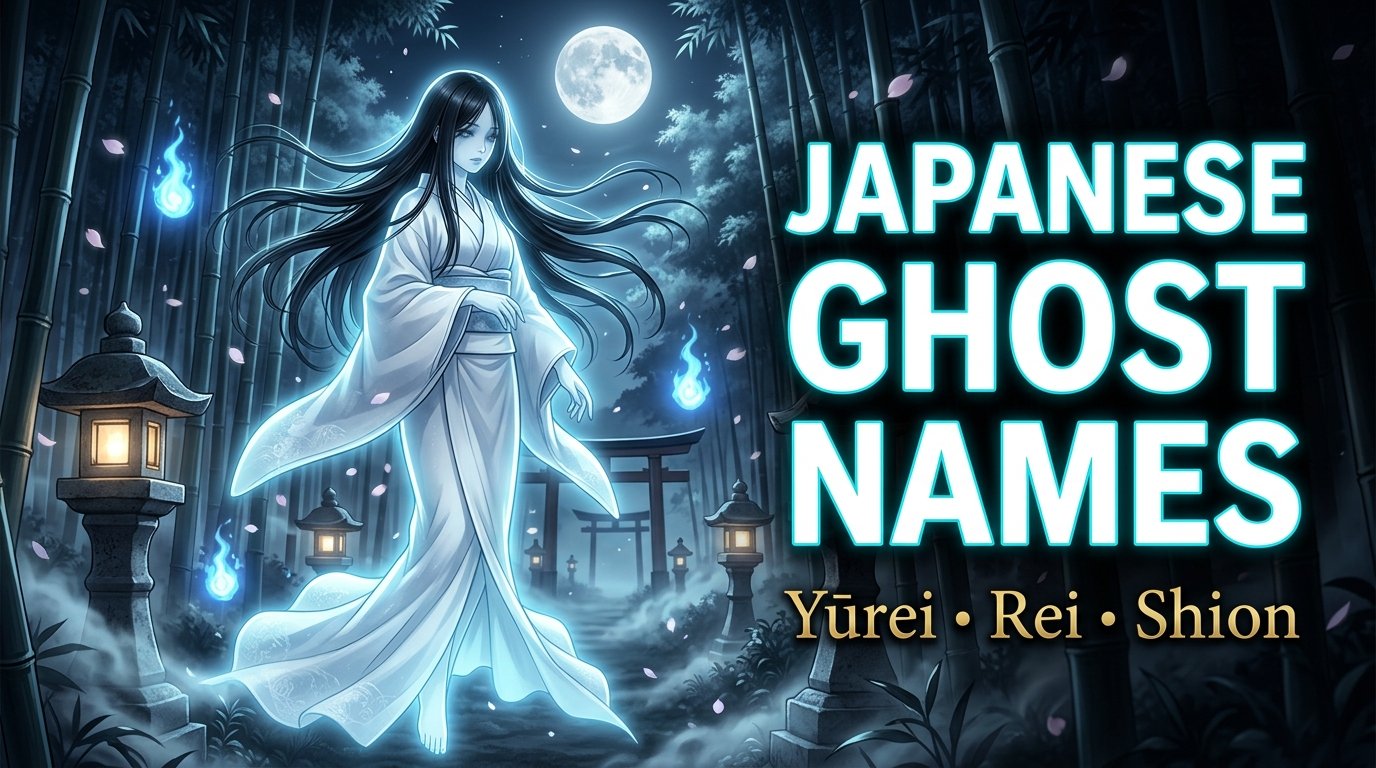
Japanese names that mean ghost carry a strange kind of beauty. They sound soft, but they hold deep meaning. Parents often search for Japanese names that mean ghost when they want something different. Something that stands out. These names connect to old folklore. They whisper of spirits and shadows. You won’t find them on every top-ten baby name list, and that’s exactly the point.
This guide walks you through the best Japanese names that mean ghost. We’ll cover girl names, boy names, and unisex picks too. You’ll learn what each name means. You’ll see how to say it out loud. We’ll even touch on the kanji behind these Japanese names that mean ghost. So if you love mystery, folklore, or just names with real depth, stick around. You’re in the right place.
What Do Japanese Names That Mean Ghost Really Symbolize?
Meaning: Spirit greenery, spirit vegetable field (soft nature-spirit blend)
Pronunciation: ray-nah
Script: 霊菜
Kageha
Meaning: Shadow feather
Pronunciation: kah-geh-hah
Script: 影羽
Tamami
Meaning: Beautiful soul
Pronunciation: tah-mah-mee
Script: 魂美
Yūka
Meaning: Faint spirit fragrance
Pronunciation: yoo-kah
Script: 幽香
Meiri
Meaning: Dark jasmine
Pronunciation: may-ree
Script: 冥莉
Reimi
Meaning: Spirit beauty
Pronunciation: ray-mee
Script: 霊美
Kagene
Meaning: Shadow sound
Pronunciation: kah-geh-neh
Script: 影音
Tamaho
Meaning: Soul ear of rice, symbol of abundance and spirit
Pronunciation: tah-mah-hoh
Script: 魂穂
Genri
Meaning: Illusion jasmine
Pronunciation: gen-ree
Script: 幻莉
Reise
Meaning: Spirit blessing
Pronunciation: ray-seh
Script: 霊瀬
Kagemi (variant)
Meaning: Shadow fruit, hidden fruit of spirit
Pronunciation: kah-geh-mee
Script: 影実
Yūmei
Meaning: Faint spirit brightness
Pronunciation: yoo-may
Script: 幽明
Tamaka
Meaning: Soul fragrance
Pronunciation: tah-mah-kah
Script: 魂香
Meisa
Meaning: Dark blossoming
Pronunciation: may-sah
Script: 冥咲
Reikaze (variant)
Meaning: Spirit breeze
Pronunciation: ray-kah-zeh
Script: 霊風
Kagerin
Meaning: Shadow bell
Pronunciation: kah-geh-reen
Script: 影鈴
Genmi
Meaning: Illusion beauty
Pronunciation: gen-mee
Script: 幻美
Tamane
Meaning: Soul sound
Pronunciation: tah-mah-neh
Script: 魂音
Reisa
Meaning: Spirit blossom
Pronunciation: ray-sah
Script: 霊咲
Yūna
Meaning: Faint spirit greenery
Pronunciation: yoo-nah
Script: 幽菜
Kageyo
Meaning: Shadow generation, eternal shadow
Pronunciation: kah-geh-yoh
Script: 影世
Meirina
Meaning: Dark spirit jasmine
Pronunciation: may-ree-nah
Script: 冥莉奈
Tamasa
Meaning: Soul blossoming
Pronunciation: tah-mah-sah
Script: 魂咲
Reion
Meaning: Spirit sound, echo of the spirit
Pronunciation: ray-ohn
Script: 霊音
Japanese Names That Mean Ghost for Baby Boys
Japanese names that mean ghost for baby boys often carry strength alongside mystery. These names blend spirit, shadow, and soul with a bold sound, giving sons a name rooted in folklore yet distinctly masculine.
Reiji (variant form)
Meaning: Spirit second son
Pronunciation: ray-jee
Script: 霊二
Yūta
Meaning: Faint spirit great one
Pronunciation: yoo-tah
Script: 幽太
Kagenobu
Meaning: Shadow trust
Pronunciation: kah-geh-noh-boo
Script: 影信
Meiharu (boy variant)
Meaning: Dark spring, born of the underworld season
Pronunciation: may-hah-roo
Script: 冥晴
Tamahiko (boy variant)
Meaning: Soul boy, spirit prince
Pronunciation: tah-mah-hee-koh
Script: 魂彦
Genta (boy variant)
Meaning: Illusion thick, great illusion
Pronunciation: gen-tah
Script: 幻太
Reidai (boy variant)
Meaning: Great spirit son
Pronunciation: ray-dai
Script: 霊大
Yūsuke
Meaning: Faint spirit helper
Pronunciation: yoo-soo-keh
Script: 幽介
Kagetsugu
Meaning: Shadow successor
Pronunciation: kah-geh-tsoo-goo
Script: 影継
Meishirou
Meaning: Dark fourth son
Pronunciation: may-shee-roh
Script: 冥四郎
Tamahei
Meaning: Soul peace
Pronunciation: tah-mah-hay
Script: 魂平
Genjirou
Meaning: Illusion second son
Pronunciation: gen-jee-roh
Script: 幻次郎
Reisuke
Meaning: Spirit helper
Pronunciation: ray-soo-keh
Script: 霊介
Yūnosuke
Meaning: Faint spirit’s helper
Pronunciation: yoo-noh-soo-keh
Script: 幽之介
Kagemaru
Meaning: Shadow circle, boyhood shadow name
Pronunciation: kah-geh-mah-roo
Script: 影丸
Meiku
Meaning: Dark nine, ninth born of shadow
Pronunciation: may-koo
Script: 冥九
Tamaru
Meaning: Soul circle
Pronunciation: tah-mah-roo
Script: 魂丸
Genpachi
Meaning: Illusion eighth son
Pronunciation: gen-pah-chee
Script: 幻八
Reihachi
Meaning: Spirit eighth son
Pronunciation: ray-hah-chee
Script: 霊八
Yūjirou
Meaning: Faint spirit second son
Pronunciation: yoo-jee-roh
Script: 幽次郎
Kagetatsu
Meaning: Shadow dragon
Pronunciation: kah-geh-tah-tsoo
Script: 影辰
Meitatsu
Meaning: Dark dragon
Pronunciation: may-tah-tsoo
Script: 冥辰
Tamatatsu
Meaning: Soul dragon
Pronunciation: tah-mah-tah-tsoo
Script: 魂辰
Genzaburou
Meaning: Illusion third son
Pronunciation: gen-zah-boo-roh
Script: 幻三郎
Reizaburou
Meaning: Spirit third son
Pronunciation: ray-zah-boo-roh
Script: 霊三郎
Yūkichi (boy variant)
Meaning: Faint spirit good luck
Pronunciation: yoo-kee-chee
Script: 幽吉
Kagenari (boy variant)
Meaning: Shadow becoming, son who carries the shadow forward
Pronunciation: kah-geh-nah-ree
Script: 影成
Meikuro
Meaning: Dark ninth son
Pronunciation: may-koo-roh
Script: 冥九郎
Tamahide (boy variant)
Meaning: Soul excellence, distinguished spirit son
Meaning: Chrysanthemum spirit, tied to the Yotsuya-style ghost legends
Pronunciation: oh-kee-koo
Script: 於菊
Oiwa
Meaning: Great rock spirit, famous vengeful ghost figure
Pronunciation: oh-ee-wah
Script: 於岩
Yūreimaru
Meaning: Circle of the wandering ghost
Pronunciation: yoo-ray-mah-roo
Script: 幽霊丸
Onryomaru
Meaning: Circle of the vengeful spirit
Pronunciation: ohn-ryoh-mah-roo
Script: 怨霊丸
Yokorei
Meaning: Side spirit, lurking presence
Pronunciation: yoh-koh-ray
Script: 横霊
Bakemono
Meaning: Changing thing, shape-shifting spirit
Pronunciation: bah-keh-moh-noh
Script: 化け物
Kitsunebi
Meaning: Fox fire, ghostly flame in folklore
Pronunciation: kee-tsoo-neh-bee
Script: 狐火
Yamauba
Meaning: Mountain crone spirit
Pronunciation: yah-mah-oo-bah
Script: 山姥
Nuregami
Meaning: Wet-haired spirit
Pronunciation: noo-reh-gah-mee
Script: 濡髪
Zashikiwarashi
Meaning: Parlor child spirit, guardian house ghost
Pronunciation: zah-shee-kee-wah-rah-shee
Script: 座敷童
Funayurei
Meaning: Boat ghost, spirit of the drowned
Pronunciation: foo-nah-yoo-ray
Script: 船幽霊
Rokurokubi
Meaning: Long-neck spirit
Pronunciation: roh-koo-roh-koo-bee
Script: 轆轤首
Ubume
Meaning: Birthing woman ghost
Pronunciation: oo-boo-meh
Script: 産女
Hitodama
Meaning: Human soul flame
Pronunciation: hee-toh-dah-mah
Script: 人魂
Konjakurei
Meaning: Spirit of ancient times
Pronunciation: kohn-jah-koo-ray
Script: 今昔霊
Yorei
Meaning: Night spirit
Pronunciation: yoh-ray
Script: 夜霊
Mononoke
Meaning: Vengeful supernatural being
Pronunciation: moh-noh-noh-keh
Script: 物の怪
Ikiryo
Meaning: Living ghost, spirit that leaves a living body
Pronunciation: ee-kee-ryoh
Script: 生霊
Shiryo
Meaning: Spirit of the dead
Pronunciation: shee-ryoh
Script: 死霊
Gakirei
Meaning: Hungry ghost spirit
Pronunciation: gah-kee-ray
Script: 餓鬼霊
Kaseki
Meaning: Fire trace spirit
Pronunciation: kah-seh-kee
Script: 火跡
Ayakashi
Meaning: Mysterious sea spirit
Pronunciation: ah-yah-kah-shee
Script: 妖
Kokuei
Meaning: Black shadow spirit
Pronunciation: koh-koo-ay
Script: 黒影
Yobito
Meaning: Night wanderer, ghostly traveler
Pronunciation: yoh-bee-toh
Script: 夜人
Reijuu
Meaning: Spirit beast
Pronunciation: ray-joo
Script: 霊獣
Kageboushi
Meaning: Shadow monk spirit
Pronunciation: kah-geh-boh-shee
Script: 影法師
Tsukimono
Meaning: Attached spirit, possessing ghost
Pronunciation: tsoo-kee-moh-noh
Script: 憑き物
Ryokai
Meaning: Realm of spirits
Pronunciation: ryoh-kai
Script: 霊界 (folklore variant)
Sogenrei
Meaning: Ancestral origin spirit
Pronunciation: soh-gen-ray
Script: 祖源霊
Meidorei
Meaning: Spirit of the underworld road
Pronunciation: may-doh-ray
Script: 冥道霊
The Kanji Behind Japanese Names That Mean Ghost
Kanji gives these names their layered meaning. A single character can shift a name from soft to eerie, from gentle to haunting. Here’s a closer look at the kanji driving these ghostly names.
Reishi
Meaning: Spirit knowledge
Pronunciation: ray-shee
Script: 霊知
Yūkoku
Meaning: Faint spirit valley
Pronunciation: yoo-koh-koo
Script: 幽谷
Kagetora (kanji variant)
Meaning: Shadow arrow
Pronunciation: kah-geh-toh-rah
Script: 影虎 (alt: 影矢)
Meikaku
Meaning: Dark realm boundary
Pronunciation: may-kah-koo
Script: 冥郭
Konrei
Meaning: Soul spirit combined
Pronunciation: kohn-ray
Script: 魂霊
Genkai (kanji variant)
Meaning: Illusion boundary
Pronunciation: gen-kai
Script: 幻界
Reibun
Meaning: Spirit writing, sacred script
Pronunciation: ray-boon
Script: 霊文
Yūmyou
Meaning: Faint spirit name
Pronunciation: yoo-myoh
Script: 幽名
Kageji
Meaning: Shadow character
Pronunciation: kah-geh-jee
Script: 影字
Meishou
Meaning: Dark proof, mark of the underworld
Pronunciation: may-shoh
Script: 冥証
Reiten
Meaning: Spirit heaven
Pronunciation: ray-ten
Script: 霊天
Genmon
Meaning: Illusion gate
Pronunciation: gen-mohn
Script: 幻門
Tamaji
Meaning: Soul character
Pronunciation: tah-mah-jee
Script: 魂字
Kageshiki
Meaning: Shadow scenery
Pronunciation: kah-geh-shee-kee
Script: 影色
Reikoku
Meaning: Spirit valley
Pronunciation: ray-koh-koo
Script: 霊谷
Meiroku
Meaning: Dark record
Pronunciation: may-roh-koo
Script: 冥録
Yūsatsu
Meaning: Faint spirit book
Pronunciation: yoo-sah-tsoo
Script: 幽冊
Genjitsu
Meaning: Illusion truth
Pronunciation: gen-jee-tsoo
Script: 幻実
Reihitsu
Meaning: Spirit brush, sacred writing tool
Pronunciation: ray-hee-tsoo
Script: 霊筆
Kagekan
Meaning: Shadow seal
Pronunciation: kah-geh-kahn
Script: 影鑑
Tamasho
Meaning: Soul proof
Pronunciation: tah-mah-shoh
Script: 魂証
Meikei
Meaning: Dark scenery
Pronunciation: may-kay
Script: 冥景
Reihaku
Meaning: Spirit white, pale as a spirit
Pronunciation: ray-hah-koo
Script: 霊白
Genrai
Meaning: Illusion arrival, coming of illusion
Pronunciation: gen-rai
Script: 幻来
Kagesetsu
Meaning: Shadow theory
Pronunciation: kah-geh-seh-tsoo
Script: 影説
Tamakoku
Meaning: Soul valley
Pronunciation: tah-mah-koh-koo
Script: 魂谷
Meikan
Meaning: Dark seal
Pronunciation: may-kahn
Script: 冥鑑
Reijitsu
Meaning: Spirit truth
Pronunciation: ray-jee-tsoo
Script: 霊実
Yūkan
Meaning: Faint spirit seal
Pronunciation: yoo-kahn
Script: 幽鑑
Genkoku
Meaning: Illusion valley
Pronunciation: gen-koh-koo
Script: 幻谷
Japanese Names That Mean Ghost with a Hauntingly Elegant Sound
Some Japanese names that mean ghost don’t sound eerie at all. They flow smoothly, almost musically, proving that a name tied to spirits can still sound graceful, refined, and elegant.
Reielle (Japanese-style stylized reading)
Meaning: Spirit’s grace
Pronunciation: ray-eh-leh
Script: 霊麗
Yūrian
Meaning: Faint spirit orchid
Pronunciation: yoo-ree-ahn
Script: 幽蘭
Kagerou
Meaning: Shimmering shadow, heat haze spirit
Pronunciation: kah-geh-roh
Script: 陽炎
Meikou (elegant variant)
Meaning: Dark radiance
Pronunciation: may-koh
Script: 冥晃
Tamayura
Meaning: Soul that flickers gently
Pronunciation: tah-mah-yoo-rah
Script: 魂弖
Genfū
Meaning: Illusion breeze
Pronunciation: gen-foo
Script: 幻風
Reihana
Meaning: Spirit flower
Pronunciation: ray-hah-nah
Script: 霊花
Yūrei no Tsuki
Meaning: Moon of the wandering spirit
Pronunciation: yoo-ray-noh-tsoo-kee
Script: 幽霊の月
Kagesui
Meaning: Shadow essence
Pronunciation: kah-geh-soo-ee
Script: 影粋
Meirie
Meaning: Dark elegance
Pronunciation: may-ree-eh
Script: 冥麗
Tamane (elegant variant)
Meaning: Soul melody
Pronunciation: tah-mah-neh
Script: 魂音 (alt reading)
Genrei
Meaning: Illusion spirit
Pronunciation: gen-ray
Script: 幻霊
Reirin
Meaning: Spirit bell chime
Pronunciation: ray-reen
Script: 霊鈴
Yūka (elegant variant)
Meaning: Faint spirit blossom
Pronunciation: yoo-kah
Script: 幽華
Kagemori
Meaning: Shadow forest
Pronunciation: kah-geh-moh-ree
Script: 影森
Meisui
Meaning: Dark clear water
Pronunciation: may-soo-ee
Script: 冥水
Tamahana
Meaning: Soul flower
Pronunciation: tah-mah-hah-nah
Script: 魂華
Genrin
Meaning: Illusion bell
Pronunciation: gen-reen
Script: 幻鈴
Reisen
Meaning: Spirit stream
Pronunciation: ray-sen
Script: 霊泉
Yūshou
Meaning: Faint spirit crystal
Pronunciation: yoo-shoh
Script: 幽晶
Kagemi (elegant variant)
Meaning: Shadow charm
Pronunciation: kah-geh-mee
Script: 影魅
Meikaze
Meaning: Dark wind
Pronunciation: may-kah-zeh
Script: 冥風
Tamarin
Meaning: Soul bell
Pronunciation: tah-mah-reen
Script: 魂鈴
Genka (elegant variant)
Meaning: Illusion song
Pronunciation: gen-kah
Script: 幻歌
Reika (elegant variant)
Meaning: Spirit song
Pronunciation: ray-kah
Script: 霊歌
Yūsui
Meaning: Faint spirit clear water
Pronunciation: yoo-soo-ee
Script: 幽水
Kagerie
Meaning: Shadow ripple
Pronunciation: kah-geh-ree-eh
Script: 影漣
Meirei
Meaning: Dark spirit grace
Pronunciation: may-ray
Script: 冥麗霊
Tamasui
Meaning: Soul clear water
Pronunciation: tah-mah-soo-ee
Script: 魂水
Genrai (elegant variant)
Meaning: Illusion melody
Pronunciation: gen-rai
Script: 幻籟
How to Pronounce Japanese Names That Mean Ghost Correctly
Getting pronunciation right matters, especially with names built on subtle vowel sounds. Below, you’ll find more Japanese names that mean ghost, each with a clear phonetic breakdown so you never stumble over syllables again.
Yūgiri
Meaning: Faint spirit mist
Pronunciation: yoo-ghee-ree (soft “g,” not hard “j”)
Script: 幽霧
Reidan
Meaning: Spirit warmth
Pronunciation: ray-dahn
Script: 霊暖
Kagemitsu (name form)
Meaning: Shadow light bearer
Pronunciation: kah-geh-mee-tsoo
Script: 影満
Meikichi
Meaning: Dark good fortune
Pronunciation: may-kee-chee
Script: 冥吉
Tamahide
Meaning: Soul excellence
Pronunciation: tah-mah-hee-deh
Script: 魂秀
Genshou
Meaning: Illusion proof
Pronunciation: gen-shoh
Script: 幻証
Reijin
Meaning: Spirit person, one blessed by spirit
Pronunciation: ray-jeen
Script: 霊人
Yūmatsu
Meaning: Faint spirit pine
Pronunciation: yoo-mah-tsoo
Script: 幽松
Kageharu
Meaning: Shadow spring
Pronunciation: kah-geh-hah-roo
Script: 影春
Meifuku
Meaning: Dark blessing
Pronunciation: may-foo-koo
Script: 冥福
Tamanari
Meaning: Soul becoming
Pronunciation: tah-mah-nah-ree
Script: 魂成
Genzou
Meaning: Illusion image
Pronunciation: gen-zoh
Script: 幻像
Reikichi
Meaning: Spirit good luck
Pronunciation: ray-kee-chee
Script: 霊吉
Yūhide
Meaning: Faint spirit excellence
Pronunciation: yoo-hee-deh
Script: 幽秀
Kagemoto
Meaning: Shadow origin
Pronunciation: kah-geh-moh-toh
Script: 影元
Meihide
Meaning: Dark excellence
Pronunciation: may-hee-deh
Script: 冥秀
Tamayoshi
Meaning: Soul goodness
Pronunciation: tah-mah-yoh-shee
Script: 魂良
Genfuku
Meaning: Illusion fortune
Pronunciation: gen-foo-koo
Script: 幻福
Reinari
Meaning: Spirit becoming
Pronunciation: ray-nah-ree
Script: 霊成
Yūzou
Meaning: Faint spirit image
Pronunciation: yoo-zoh
Script: 幽像
Kagenari
Meaning: Shadow becoming
Pronunciation: kah-geh-nah-ree
Script: 影成
Meimatsu
Meaning: Dark pine
Pronunciation: may-mah-tsoo
Script: 冥松
Tamaharu
Meaning: Soul spring
Pronunciation: tah-mah-hah-roo
Script: 魂春
Genkichi
Meaning: Illusion good luck
Pronunciation: gen-kee-chee
Script: 幻吉
Reifuku
Meaning: Spirit fortune
Pronunciation: ray-foo-koo
Script: 霊福
Yūnari
Meaning: Faint spirit becoming
Pronunciation: yoo-nah-ree
Script: 幽成
Kagezou
Meaning: Shadow image
Pronunciation: kah-geh-zoh
Script: 影像
Meiharu
Meaning: Dark spring
Pronunciation: may-hah-roo
Script: 冥春
Tamakichi
Meaning: Soul good luck
Pronunciation: tah-mah-kee-chee
Script: 魂吉
Genhide
Meaning: Illusion excellence
Pronunciation: gen-hee-deh
Script: 幻秀
Japanese Names That Mean Ghost Inspired by Anime and Pop Culture
Anime loves a good ghost name. These Japanese names that mean ghost feel pulled straight from a manga panel, carrying that dramatic, otherworldly flair fans of Japanese pop culture instantly recognize.
Yūreiga
Meaning: Ghost’s painting, image of the spirit
Pronunciation: yoo-ray-gah
Script: 幽霊画
Kagerouji
Meaning: Temple of the shimmering shadow
Pronunciation: kah-geh-roh-jee
Script: 陽炎寺
Meikyuu
Meaning: Dark labyrinth, underworld maze
Pronunciation: may-kyoo
Script: 冥宮
Reizoku
Meaning: Spirit clan
Pronunciation: ray-zoh-koo
Script: 霊族
Tamashii Ken
Meaning: Sword of the soul
Pronunciation: tah-mah-shee-ken
Script: 魂剣
Genjuu
Meaning: Illusion beast
Pronunciation: gen-joo
Script: 幻獣
Yamikage
Meaning: Darkness shadow
Pronunciation: yah-mee-kah-geh
Script: 闇影
Reikishi
Meaning: Spirit knight
Pronunciation: ray-kee-shee
Script: 霊騎士
Kuroyurei
Meaning: Black ghost
Pronunciation: koo-roh-yoo-ray
Script: 黒幽霊
Shiroshiryo
Meaning: White death spirit
Pronunciation: shee-roh-shee-ryoh
Script: 白死霊
Reikaiou
Meaning: King of the spirit realm
Pronunciation: ray-kai-oh
Script: 霊界王
Tamashigami
Meaning: Soul god, deity of spirits
Pronunciation: tah-mah-shee-gah-mee
Script: 魂神
Genmakai
Meaning: Illusion demon realm
Pronunciation: gen-mah-kai
Script: 幻魔界
Yamiyurei
Meaning: Dark ghost, ghost of darkness
Pronunciation: yah-mee-yoo-ray
Script: 闇幽霊
Reisoul (stylized hybrid reading)
Meaning: Spirit essence, pop-style soul name
Pronunciation: ray-sohl
Script: 霊素
Kagehime
Meaning: Shadow princess
Pronunciation: kah-geh-hee-meh
Script: 影姫
Meioujo
Meaning: Queen of the dark realm
Pronunciation: may-oh-joh
Script: 冥王女
Reidragon (hybrid stylized)
Meaning: Spirit dragon
Pronunciation: ray-drah-gon
Script: 霊龍
Yamikaze
Meaning: Dark wind, wind of shadows
Pronunciation: yah-mee-kah-zeh
Script: 闇風
Tamaoni
Meaning: Soul demon
Pronunciation: tah-mah-oh-nee
Script: 魂鬼
Genryuu
Meaning: Illusion dragon
Pronunciation: gen-ryoo
Script: 幻龍
Reihime
Meaning: Spirit princess
Pronunciation: ray-hee-meh
Script: 霊姫
Kuroreikon
Meaning: Black spirit soul
Pronunciation: koo-roh-ray-kohn
Script: 黒霊魂
Meikishi
Meaning: Dark knight, warrior of shadows
Pronunciation: may-kee-shee
Script: 冥騎士
Yūreioukoku
Meaning: Kingdom of ghosts
Pronunciation: yoo-ray-oh-koh-koo
Script: 幽霊王国
Kagetenshi
Meaning: Shadow angel
Pronunciation: kah-geh-ten-shee
Script: 影天使
Reimaou
Meaning: Spirit demon king
Pronunciation: ray-mah-oh
Script: 霊魔王
Tamashiiyami
Meaning: Darkness of the soul
Pronunciation: tah-mah-shee-yah-mee
Script: 魂闇
Genreiou
Meaning: King of illusion spirits
Pronunciation: gen-ray-oh
Script: 幻霊王
Yūreisenshi
Meaning: Ghost warrior
Pronunciation: yoo-ray-sen-shee
Script: 幽霊戦士
Tips for Choosing Japanese Names That Mean Ghost for Your Child
Picking Japanese names that mean ghost isn’t quite like picking a typical baby name. You’re not just choosing something that sounds nice. You’re choosing a name tied to spirit, folklore, and centuries of tradition. So it helps to slow down and think it through.
Start with the sound. Say the name out loud. Does it flow with your family name? Some Japanese names that mean ghost carry heavy consonant sounds, while others feel soft and airy. Both work, but the fit matters.
Next, look at the kanji. This is where things get interesting. The same sound can carry different meanings depending on which kanji you use. A name written with 霊 (spirit) feels different from one written with 幻 (illusion), even if they sound similar. If you’re serious about Japanese naming traditions, don’t skip this step. Ask a native speaker or a trusted translator to double-check your choice.
Think about context too. Some names lean into Japanese mythology names and yokai folklore, like Ubume or Rokurokubi. Others sound more like modern Japanese baby names with a subtle nod to spirit or soul. Decide which direction fits your family’s taste, whether that’s deep folklore or something more contemporary and wearable.
Here are a few quick pointers to keep in mind:
Check the pronunciation guide before you commit. A name that reads well doesn’t always sound natural out loud.
Avoid names tied directly to tragic figures from folklore, like Oiwa, unless you’re fully aware of the story behind them.
Balance meaning with practicality. A name meaning ghost or spirit can still sound elegant and everyday, not just eerie.
If you want a unisex option, look at names built around neutral kanji like 霊 (spirit) or 幻 (illusion) rather than gendered characters.
Ask family members for their honest reaction. Names carry culture, and outside perspective helps catch anything you might’ve missed.
At the end of the day, Japanese names that mean ghost work best when they feel personal. They shouldn’t just check a trend box. Whether you’re drawn to the poetry of Yūrei, the folklore of Zashikiwarashi, or the elegance of Reika, choose the one that feels like it truly belongs to your child.
Frequently Asked Questions
People searching for these names usually want quick, honest answers. Below, we cover the most common questions readers ask.
What do Japanese ghost names usually symbolize?
They often connect to spirit, shadow, or the afterlife. Japanese names that mean ghost tie back to old folklore beliefs.
Are these names common in Japan today?
Not really. Japanese names that mean ghost stay rare, chosen mostly for their poetic sound and folklore roots.
Can girls and boys share the same ghost-meaning names?
Yes. Many Japanese names that mean ghost work as unisex picks, especially names built around neutral kanji like spirit.
How do I pronounce these spirit-related names correctly?
Break the name into syllables first. Japanese names that mean ghost often follow simple, consistent phonetic patterns throughout.
Do these names come from Japanese mythology?
Many do. Some Japanese names that mean ghost trace directly back to yokai folklore and famous ghost legends.
Is it okay to name my child after a ghost?
Absolutely. Japanese names that mean ghost often symbolize protection, mystery, or connection to ancestors, not anything negative.
Where can I find the kanji for these names?
Check with a translator or native speaker. Japanese names that mean ghost rely heavily on precise kanji meaning.
Conclusion
Japanese names that mean ghost offer something most baby name lists don’t. They carry mystery. They carry history. They connect your child to old folklore, quiet spirits, and stories passed down for generations. Whether you loved the soft sound of Yūrei or the bold edge of Kagetora, you’ve seen how varied Japanese names that mean ghost really are. They work for girls, boys, or anyone in between.
Choosing a name like this takes a little extra thought. But that’s part of the fun. Japanese names that mean ghost aren’t just trendy. They’re meaningful. They tell a story before your child even speaks a word. So take your time. Say each name out loud. Check the kanji. And pick the Japanese name that mean ghost that feels right for your family.