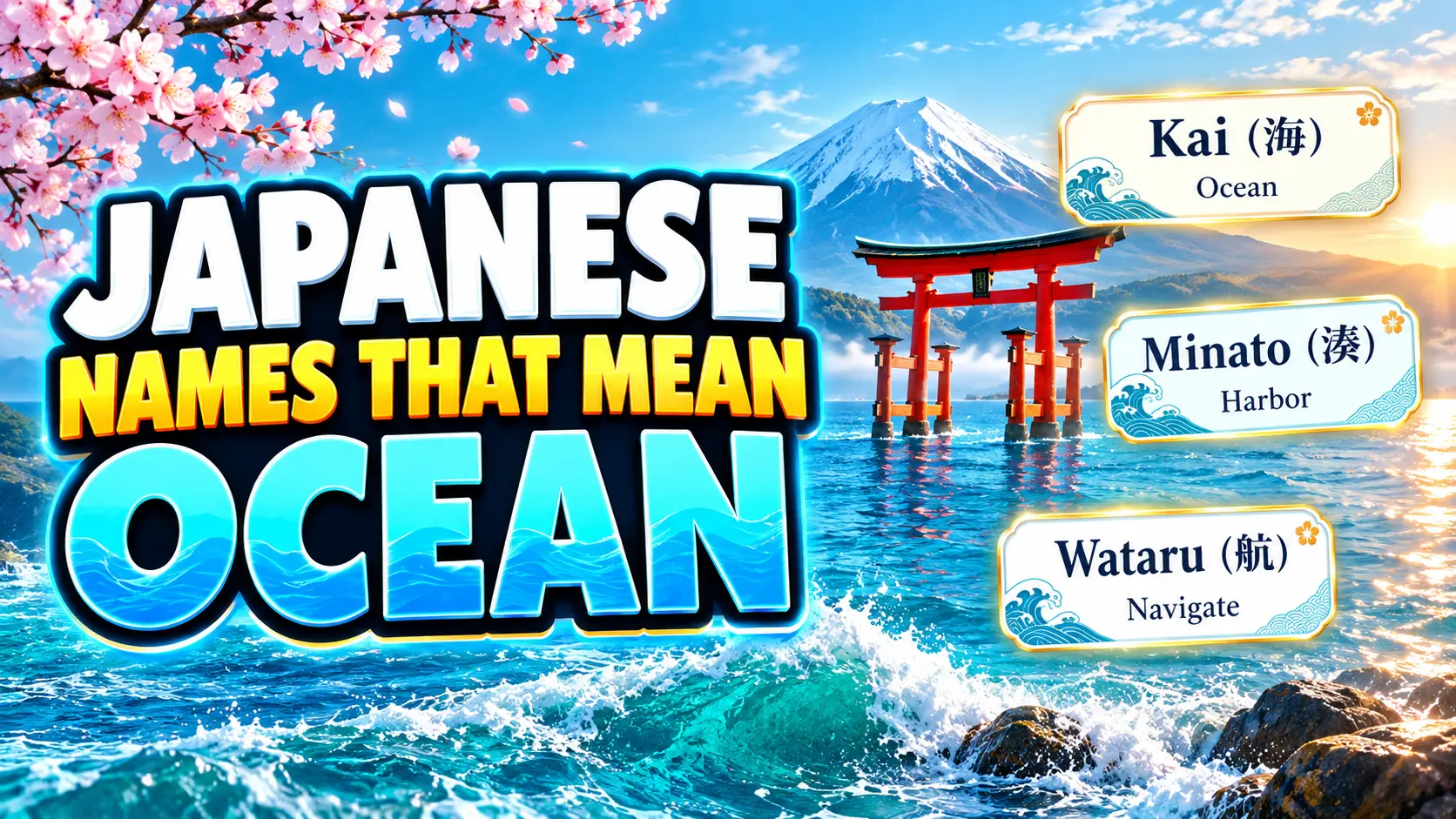
Do you love the sea? Then you’ll love Japanese names that mean ocean. These names feel calm, deep, and full of life. Japan is an island nation. The ocean shapes daily life there. So it’s no surprise that Japanese names that mean ocean are so popular. Parents choose them to give their child a big, open heart.
Japanese names that mean ocean come in many styles. Some are short and sweet, like Umi. Others are rare and poetic. Many of them are also lovely Japanese baby names with a deep meaning. You’ll find Japanese names meaning sea for girls, boys, and everyone else. Each name has a story behind its kanji. Read on to find the best Japanese ocean names and what they mean. Your perfect pick might be waiting.
These thirty japanese names that mean ocean show the range, from classic to modern.
Umi
Meaning: Sea or ocean
Pronunciation: OO-mee
Script: 海
Kai
Meaning: Sea
Pronunciation: KAH-ee
Script: 海
Kaito
Meaning: Sea plus the Big Dipper constellation
Pronunciation: KAH-ee-toh
Script: 海斗
Minato
Meaning: Harbor or port
Pronunciation: mee-NAH-toh
Script: 湊
Nagi
Meaning: Calm sea, the stillness when wind and waves fade
Pronunciation: NAH-gee
Script: 凪
Ushio
Meaning: Tide
Pronunciation: oo-SHEE-oh
Script: 潮
Shio
Meaning: Tide
Pronunciation: SHEE-oh
Script: 潮
Wataru
Meaning: To sail or cross the sea
Pronunciation: wah-TAH-roo
Script: 航
Hiroshi
Meaning: Vast ocean
Pronunciation: hee-ROH-shee
Script: 洋
Yosuke
Meaning: Ocean plus helper
Pronunciation: YOH-skeh
Script: 洋介
Yota
Meaning: Great ocean
Pronunciation: YOH-tah
Script: 洋太
Yohei
Meaning: Ocean plus peace
Pronunciation: YOH-hay
Script: 洋平
Yoichi
Meaning: Ocean plus one, often chosen for a first son
Pronunciation: YOH-ee-chee
Script: 洋一
Kairi
Meaning: Sea village
Pronunciation: KAH-ee-ree
Script: 海里
Kaisei
Meaning: Sea star, or starfish
Pronunciation: kah-ee-SAY
Script: 海星
Sazanami
Meaning: Ripples, small gentle waves
Pronunciation: sah-zah-NAH-mee
Script: 漣
Hama
Meaning: Beach or shore
Pronunciation: HAH-mah
Script: 浜
Umito
Meaning: Person of the sea
Pronunciation: oo-MEE-toh
Script: 海人
Ao
Meaning: Deep blue
Pronunciation: AH-oh
Script: 蒼
Sui
Meaning: Water
Pronunciation: SOO-ee
Script: 水
Isana
Meaning: Old poetic word for whale, written as “brave fish”
Pronunciation: ee-SAH-nah
Script: 勇魚
Kota
Meaning: Great voyage
Pronunciation: KOH-tah
Script: 航太
Koki
Meaning: Voyage plus shine
Pronunciation: KOH-kee
Script: 航輝
Mizuto
Meaning: Water plus the Big Dipper
Pronunciation: mee-ZOO-toh
Script: 水斗
Kaiki
Meaning: Sea plus brilliance
Pronunciation: KAH-ee-kee
Script: 海輝
Kaiya
Meaning: Sea
Pronunciation: KAH-ee-yah
Script: 海也
Aoto
Meaning: Deep blue plus the Big Dipper
Pronunciation: ah-OH-toh
Script: 蒼斗
Taiyo
Meaning: Great ocean
Pronunciation: TAH-ee-yoh
Script: 大洋
Kaisuke
Meaning: Sea plus helper
Pronunciation: KAH-ee-skeh
Script: 海介
Harumi
Meaning: Spring sea
Pronunciation: hah-ROO-mee
Script: 春海
Top Japanese Names That Mean Ocean for Girls
Japanese names that mean ocean for girls often sound soft and musical. Many end in -mi for beauty or -ko for child. Pick from these thirty graceful options, each tied to waves, tides, beaches, or the open sea.
Nanami
Meaning: Seven seas
Pronunciation: nah-NAH-mee
Script: 七海
Umika
Meaning: Sea fragrance
Pronunciation: oo-MEE-kah
Script: 海香
Umiko
Meaning: Child of the sea
Pronunciation: oo-MEE-koh
Script: 海子
Miumi
Meaning: Beautiful sea
Pronunciation: mee-OO-mee
Script: 美海
Umine
Meaning: Sound of the sea
Pronunciation: oo-MEE-neh
Script: 海音
Honami
Meaning: Sail and wave
Pronunciation: hoh-NAH-mee
Script: 帆波
Manami
Meaning: Love and sea
Pronunciation: mah-NAH-mee
Script: 愛海
Shiomi
Meaning: Tide and beauty
Pronunciation: shee-OH-mee
Script: 汐美
Shione
Meaning: Sound of the tide
Pronunciation: shee-OH-neh
Script: 汐音
Isoko
Meaning: Child of the rocky shore
Pronunciation: ee-SOH-koh
Script: 磯子
Hamako
Meaning: Child of the beach
Pronunciation: hah-MAH-koh
Script: 浜子
Namiko
Meaning: Wave child
Pronunciation: nah-MEE-koh
Script: 波子
Minami
Meaning: Beautiful wave
Pronunciation: mee-NAH-mee
Script: 美波
Chinami
Meaning: A thousand waves
Pronunciation: chee-NAH-mee
Script: 千波
Mahiro
Meaning: True ocean
Pronunciation: mah-HEE-roh
Script: 真洋
Hiromi
Meaning: Ocean beauty
Pronunciation: hee-ROH-mee
Script: 洋美
Hiroka
Meaning: Ocean fragrance
Pronunciation: hee-ROH-kah
Script: 洋香
Yoko
Meaning: Ocean child
Pronunciation: YOH-koh
Script: 洋子
Aomi
Meaning: Blue sea
Pronunciation: ah-OH-mee
Script: 青海
Umino
Meaning: Of the sea
Pronunciation: oo-MEE-noh
Script: 海乃
Sango
Meaning: Coral
Pronunciation: SAHN-goh
Script: 珊瑚
Misaki
Meaning: Cape, a point of land reaching into the sea
Rare Japanese names that mean ocean come from poetry, currents, shorebirds, and old sea words. Few babies carry them, which makes each one feel special. Here are thirty unusual names for parents who want something truly different.
Naniwa
Meaning: Swift waves, an old poetic name for the Osaka area
Pronunciation: nah-NEE-wah
Script: 浪速
Shiosai
Meaning: The murmur of the rushing tide
Pronunciation: shee-OH-sah-ee
Script: 潮騒
Shiranami
Meaning: White-capped waves
Pronunciation: shee-rah-NAH-mee
Script: 白波
Yunagi
Meaning: Evening calm, when the sea breeze stops
Pronunciation: yoo-NAH-gee
Script: 夕凪
Asanagi
Meaning: Morning calm at sea
Pronunciation: ah-sah-NAH-gee
Script: 朝凪
Uzushio
Meaning: Whirlpool, a swirling tide
Pronunciation: oo-zoo-SHEE-oh
Script: 渦潮
Miotsukushi
Meaning: Channel markers that guide ships
Pronunciation: mee-oh-tsoo-KOO-shee
Script: 澪標
Suma
Meaning: A seaside district famed in classic literature
Pronunciation: SOO-mah
Script: 須磨
Ruri
Meaning: Lapis lazuli, a deep blue gem
Pronunciation: ROO-ree
Script: 瑠璃
Shiokaze
Meaning: Sea breeze
Pronunciation: shee-oh-KAH-zeh
Script: 潮風
Umidori
Meaning: Seabird
Pronunciation: oo-mee-DOH-ree
Script: 海鳥
Shinkai
Meaning: Deep sea
Pronunciation: sheen-KAH-ee
Script: 深海
Isonami
Meaning: Waves on a rocky shore
Pronunciation: ee-soh-NAH-mee
Script: 磯波
Toyomi
Meaning: Rich sea
Pronunciation: toh-YOH-mee
Script: 豊海
Aimi
Meaning: Indigo sea
Pronunciation: AH-ee-mee
Script: 藍海
Ran
Meaning: Indigo, the color of deep water
Pronunciation: RAHN
Script: 藍
Akoya
Meaning: Pearl oyster
Pronunciation: ah-KOH-yah
Script: 阿古屋
Tai
Meaning: Sea bream, a fish of good luck
Pronunciation: TAH-ee
Script: 鯛
Shachi
Meaning: Orca, or killer whale
Pronunciation: SHAH-chee
Script: 鯱
Kame
Meaning: Turtle, a symbol of long life
Pronunciation: KAH-meh
Script: 亀
Umihime
Meaning: Sea princess
Pronunciation: oo-mee-HEE-meh
Script: 海姫
Kuroshio
Meaning: The Black Current, a warm stream along Japan’s coast
Pronunciation: koo-roh-SHEE-oh
Script: 黒潮
Oyashio
Meaning: The Parent Current, a cold stream from the north
Pronunciation: oh-yah-SHEE-oh
Script: 親潮
Utsumi
Meaning: Inland sea
Pronunciation: oot-SOO-mee
Script: 内海
Kōkai
Meaning: Sea voyage
Pronunciation: KOH-kah-ee
Script: 航海
Namiji
Meaning: Sea route across the waves
Pronunciation: nah-MEE-jee
Script: 波路
Hiroumi
Meaning: Wide sea
Pronunciation: hee-roh-OO-mee
Script: 広海
Seiyo
Meaning: Blue ocean
Pronunciation: SAY-yoh
Script: 青洋
Awa
Meaning: Sea foam
Pronunciation: AH-wah
Script: 泡
Nankai
Meaning: Southern sea
Pronunciation: NAHN-kah-ee
Script: 南海
Japanese Names That Mean Ocean in Mythology and Folklore
Old tales give ocean names their deepest roots. Dragon kings, sea goddesses, tide jewels, and fishermen fill Japanese folklore. These thirty names borrow from gods, legends, and sea spirits. Each one carries a story across the waves.
Ryūjin
Meaning: Dragon god who rules the sea
Pronunciation: RYOO-jeen
Script: 龍神
Otohime
Meaning: Princess of the Dragon Palace
Pronunciation: oh-toh-HEE-meh
Script: 乙姫
Toyotama
Meaning: Bountiful jewel, the daughter of the sea god
Pronunciation: toh-yoh-TAH-mah
Script: 豊玉
Tamayori
Meaning: Spirit vessel, the younger sister of Toyotama
Pronunciation: tah-mah-YOH-ree
Script: 玉依
Umisachihiko
Meaning: Prince of the sea’s bounty
Pronunciation: oo-mee-sah-chee-HEE-koh
Script: 海幸彦
Shiotsuchi
Meaning: Elder of the tides who guided a prince to the sea palace
Pronunciation: shee-oh-TSOO-chee
Script: 塩土
Shiomitsu
Meaning: Rising tide, named for the legendary tide-filling jewel
Pronunciation: shee-oh-MEE-tsoo
Script: 潮満
Shiohi
Meaning: Ebbing tide, named for the legendary tide-ebbing jewel
Pronunciation: shee-oh-HEE
Script: 潮干
Ebisu
Meaning: God of fishermen and good fortune
Pronunciation: eh-BEE-soo
Script: 恵比寿
Benzaiten
Meaning: Goddess of water, music, and eloquence
Pronunciation: ben-ZAH-ee-ten
Script: 弁才天
Susanoo
Meaning: Storm god who was given rule over the sea
Pronunciation: soo-sah-NOH-oh
Script: 須佐之男
Isora
Meaning: Sea god of the Azumi clan and guardian of sailors
Pronunciation: ee-SOH-rah
Script: 磯良
Sumiyoshi
Meaning: Name of the Shinto spirits who protect sea voyages
Pronunciation: soo-mee-YOH-shee
Script: 住吉
Munakata
Meaning: Name of the shrine of three sea goddesses
Pronunciation: moo-nah-KAH-tah
Script: 宗像
Ichikishima
Meaning: One of the three sea goddesses of Munakata
Pronunciation: ee-chee-kee-SHEE-mah
Script: 市杵島
Tagitsu
Meaning: Rapids, another of the three Munakata sea goddesses
Pronunciation: tah-GEE-tsoo
Script: 湍津
Konpira
Meaning: Protector of sailors and sea travelers
Pronunciation: kohn-PEE-rah
Script: 金毘羅
Funadama
Meaning: Ship spirit that guards sailors
Pronunciation: foo-nah-DAH-mah
Script: 船霊
Urashima
Meaning: Bay island, the fisherman who visited the Dragon Palace
Pronunciation: oo-rah-SHEE-mah
Script: 浦島
Ryugu
Meaning: The Dragon Palace beneath the sea
Pronunciation: RYOO-goo
Script: 竜宮
Tamatori
Meaning: Jewel taker, a diver who stole a jewel from the Dragon King
Pronunciation: tah-mah-TOH-ree
Script: 玉取
Ama
Meaning: Sea woman, the name for traditional free divers
Pronunciation: AH-mah
Script: 海女
Shiranui
Meaning: Unknown fire, the mysterious lights over the southern sea
Pronunciation: shee-rah-NOO-ee
Script: 不知火
Ningyo
Meaning: Mermaid
Pronunciation: NEEN-gyoh
Script: 人魚
Hoori
Meaning: Fire fading, the prince who married the sea princess
Pronunciation: hoh-OH-ree
Script: 火遠理
Suijin
Meaning: Water god
Pronunciation: soo-ee-JEEN
Script: 水神
Kaijin
Meaning: Sea god
Pronunciation: KAH-ee-jeen
Script: 海神
Shinkiro
Meaning: Mirage, said to be dreamed by a giant sea clam
Pronunciation: sheen-kee-ROH
Script: 蜃気楼
Ryūō
Meaning: Dragon king
Pronunciation: RYOO-oh
Script: 竜王
Kurage
Meaning: Sea moon, the jellyfish from the Dragon King’s tale
Pronunciation: koo-RAH-geh
Script: 海月
Japanese Names That Mean Ocean, Sea, and Waves Compared
Ocean, sea, and wave names each paint a different picture. Ocean names feel vast and calm. Sea names feel warm and familiar. Wave names feel lively and bright. Here are thirty names grouped by that spirit.
Hirokazu
Meaning: Ocean plus harmony
Pronunciation: hee-roh-KAH-zoo
Script: 洋和
Yoki
Meaning: Ocean plus shine
Pronunciation: YOH-kee
Script: 洋輝
Yoma
Meaning: Ocean plus truth
Pronunciation: YOH-mah
Script: 洋真
Yosei
Meaning: Ocean plus sincerity
Pronunciation: yoh-SAY
Script: 洋誠
Yoka
Meaning: Ocean plus flower
Pronunciation: YOH-kah
Script: 洋花
Yona
Meaning: Ocean plus graceful
Pronunciation: YOH-nah
Script: 洋奈
Yono
Meaning: Of the ocean
Pronunciation: YOH-noh
Script: 洋乃
Hiroyuki
Meaning: Of the vast ocean
Pronunciation: hee-roh-YOO-kee
Script: 洋之
Hirotoshi
Meaning: Ocean plus talented
Pronunciation: hee-roh-TOH-shee
Script: 洋俊
Hiroko
Meaning: Ocean child
Pronunciation: hee-ROH-koh
Script: 洋子
Kaiga
Meaning: Elegant sea
Pronunciation: KAH-ee-gah
Script: 海雅
Kaihei
Meaning: Peaceful sea
Pronunciation: kah-ee-HAY
Script: 海平
Kaiko
Meaning: Child of the sea
Pronunciation: KAH-ee-koh
Script: 海子
Kaimu
Meaning: Sea dream
Pronunciation: KAH-ee-moo
Script: 海夢
Kaishū
Meaning: Sea boat
Pronunciation: kah-ee-SHOO
Script: 海舟
Kairen
Meaning: Sea lotus
Pronunciation: kah-ee-REN
Script: 海蓮
Umina
Meaning: Sea plus graceful
Pronunciation: oo-MEE-nah
Script: 海奈
Umikaze
Meaning: Sea breeze
Pronunciation: oo-mee-KAH-zeh
Script: 海風
Sōkai
Meaning: Swift sea
Pronunciation: SOH-kah-ee
Script: 颯海
Taikai
Meaning: Great sea
Pronunciation: TAH-ee-kah-ee
Script: 大海
Namino
Meaning: Of the waves
Pronunciation: nah-MEE-noh
Script: 波乃
Namiho
Meaning: Wave plus sail
Pronunciation: nah-MEE-hoh
Script: 波帆
Rōta
Meaning: Great wave
Pronunciation: ROH-tah
Script: 浪太
Ōnami
Meaning: Big wave
Pronunciation: OH-nah-mee
Script: 大波
Aonami
Meaning: Blue waves
Pronunciation: ah-oh-NAH-mee
Script: 青波
Hinami
Meaning: Sunlit wave
Pronunciation: hee-NAH-mee
Script: 陽波
Yunami
Meaning: Gentle wave
Pronunciation: yoo-NAH-mee
Script: 優波
Namihiko
Meaning: Wave prince
Pronunciation: nah-mee-HEE-koh
Script: 波彦
Namisuke
Meaning: Wave helper
Pronunciation: nah-mee-SOO-keh
Script: 波介
Namiha
Meaning: Wave plus feather
Pronunciation: nah-MEE-hah
Script: 波羽
How to Choose From Japanese Names That Mean Ocean
Choosing from Japanese names that mean ocean feels exciting and a little overwhelming. So many options exist. A few simple steps can narrow the list fast. Use these tips to find a name you’ll love for years.
Start with the meaning. Ocean name meaning matters more than sound. Ask what you want the name to say. Calm? Courage? Freedom? Japanese baby names with meaning often carry a quiet wish. Nagimi hints at peace. Kōya hints at adventure.
Study the kanji. Japanese names with kanji meaning can shift a lot. The same sound can use different characters. Kanji for ocean include 海 and 洋, yet each one paints a different picture. Japanese kanji characters also hide extra layers. Always check the kanji name meaning before you decide.
Check the official rules. Names registered in Japan must use approved characters. Most sea kanji pass with ease. Still, double-check rarer ones.
Say it out loud. Pair the name with your surname. Does it flow? Japanese name pronunciation should feel smooth. Japanese first names usually follow the family name in Japan. Test both orders to be safe.
Match the name to your child. Japanese names for girls often end in -mi or -ko. Japanese names for boys often end in -to, -ta, or -ya. Unisex Japanese names suit anyone. Izumi is one of the gender-neutral baby names that works for any child.
Balance old and new. Traditional Japanese names feel timeless. Modern Japanese names feel fresh and light. Japanese baby name trends now lean toward short, soft sounds. Name popularity in Japan shifts every year. A trendy pick may feel dated in twenty years. A classic rarely does.
Decide how rare you want it. Rare Japanese names stand out. Unique Japanese names spark conversation. However, a very rare name can mean constant spelling questions. Beautiful Japanese names often sit happily in the middle.
Explore culture and nature. Japanese culture and names go hand in hand. Ocean symbolism in Japan stretches from fishing villages to temple art. Japanese mythology sea deities add a story to any name. Japanese nature names and nature-inspired names also tie a child to the world outside. Sea-inspired baby names and water-themed baby names are two lovely lanes. Japanese names meaning water and names that symbolize the sea work well, too.
Honor naming traditions. Japanese naming traditions include a fortune-telling method called seimei handan. It counts the strokes in each kanji. Some families also ask elders for advice. You don’t have to follow these steps. However, they add depth and meaning.
Ask a native speaker. A friend or tutor can catch odd readings fast. Japanese name readings can surprise you. Some names below are creative kanji pairings. Confirm the reading before you register or print any name.
Use the list wisely. Browse these Japanese baby name ideas. Mark five favorites. Say each one three times. Then sleep on it. The best meaningful baby names tend to stay with you.
Umiya
Meaning: Sea, with a classic name ending
Pronunciation: oo-MEE-yah
Script: 海哉
Ryōkai
Meaning: Cool, refreshing sea
Pronunciation: ryoh-KAH-ee
Script: 涼海
Yūmi
Meaning: Gentle sea
Pronunciation: YOO-mee
Script: 優海
Nagimi
Meaning: Calm sea
Pronunciation: nah-GEE-mee
Script: 凪海
Shiho
Meaning: Tide plus sail
Pronunciation: SHEE-hoh
Script: 汐帆
Kōya
Meaning: Voyage
Pronunciation: KOH-yah
Script: 航也
Kōto
Meaning: Voyage plus the Big Dipper
Pronunciation: KOH-toh
Script: 航斗
Shūto
Meaning: Boat plus the Big Dipper
Pronunciation: SHOO-toh
Script: 舟斗
Homi
Meaning: Sail plus beauty
Pronunciation: HOH-mee
Script: 帆美
Aika
Meaning: Indigo flower
Pronunciation: AH-ee-kah
Script: 藍花
Hamano
Meaning: Of the beach
Pronunciation: hah-MAH-noh
Script: 浜乃
Isomi
Meaning: Rocky shore plus beauty
Pronunciation: ee-SOH-mee
Script: 磯美
Okito
Meaning: Open sea plus the Big Dipper
Pronunciation: oh-KEE-toh
Script: 沖斗
Shimako
Meaning: Island child
Pronunciation: shee-MAH-koh
Script: 島子
Urako
Meaning: Child of the bay
Pronunciation: oo-RAH-koh
Script: 浦子
Sena
Meaning: Rapids plus graceful
Pronunciation: SEH-nah
Script: 瀬奈
Uzumi
Meaning: Whirlpool sea
Pronunciation: oo-ZOO-mee
Script: 渦海
Mizuha
Meaning: Water plus feather
Pronunciation: mee-ZOO-hah
Script: 水羽
Mizue
Meaning: Water plus inlet
Pronunciation: mee-ZOO-eh
Script: 水江
Izumi
Meaning: Spring, a fresh source of water
Pronunciation: ee-ZOO-mee
Script: 泉
Kiyomi
Meaning: Clear sea
Pronunciation: kee-YOH-mee
Script: 清海
Mitsumi
Meaning: Light on the sea
Pronunciation: mee-TSOO-mee
Script: 光海
Nagine
Meaning: Sound of a calm sea
Pronunciation: nah-GEE-neh
Script: 凪音
Kairō
Meaning: Bright sea
Pronunciation: kah-ee-ROH
Script: 海朗
Umiki
Meaning: Sea plus hope
Pronunciation: oo-MEE-kee
Script: 海希
Rukai
Meaning: Lapis sea, named for the deep blue gem
Pronunciation: roo-KAH-ee
Script: 瑠海
Mashio
Meaning: True tide
Pronunciation: mah-SHEE-oh
Script: 真潮
Hiroha
Meaning: Ocean plus feather
Pronunciation: hee-ROH-hah
Script: 洋羽
Namiki
Meaning: Wave plus tree
Pronunciation: nah-MEE-kee
Script: 波樹
Chiumi
Meaning: A thousand seas
Pronunciation: chee-OO-mee
Script: 千海
How to Pronounce Japanese Names That Mean Ocean
Japanese names look tricky at first. They’re actually easy once you know a few sound rules. Learn the vowels, the rhythm, and the long sounds. Then Japanese names that mean ocean will roll off your tongue.
Learn the five vowels. Japanese uses a (ah), i (ee), u (oo), e (eh), and o (oh). Each one stays pure. English tends to add glides. Japanese doesn’t. So Umi sounds like OO-mee. It never sounds like YOU-my. Every one of the Japanese names that mean ocean follows this pattern.
Watch the long vowels. A macron (ō or ū) marks a long vowel. Hold it about twice as long. Yūkai stretches the first vowel. Shūkai does the same. Kōya holds its first o a beat longer. Long vowels can change meaning in Japanese names, so don’t skip them.
Mind the “ai” and “ei” sounds. The ai in Kai sounds close to the English word “eye.” Say both vowels quickly in one smooth motion. The ei sound resembles “ay,” as in “say.”
Tame the Japanese R. The Japanese R is a quick tap of the tongue. It sits between R, L, and D. Try it on Rukai. Keep it light. Don’t roll it like Spanish.
Practice “tsu” and “fu.” The tsu sounds like the end of “cats.” The fu is soft, like blowing out a candle. Mutsumi and Fuyumi are perfect practice names.
Keep the u gentle. In syllables like su, the vowel often fades. Kosuke sounds closer to KOH-skeh. You’ll hear this often in natural speech.
Don’t skip the n. The final n counts as its own beat. Genkai has a clear n before the k. Shion has three beats: shi-o-n. Give each one its time.
Know your readings. Japanese name readings can differ from dictionary readings. Special name readings are called nanori. Japanese name etymology helps here. 海 reads umi in the native Japanese style. It reads kai in the Chinese-derived style. Umi name meaning stays “sea” in both cases. The meaning of Umi never changes. Only the sound shifts. This layered Japanese name origin explains why one kanji can have many readings.
Listen and repeat. Native audio beats any written guide. Use a trusted dictionary app or a language video. Repeat each name slowly three times. Then speed up.
Use the guide below. The phonetic spellings use capital letters to mark a gentle beat. They’re a starting point. They’re not a strict rule. Say the following Japanese given names out loud as you read.
Fuyumi
Meaning: Winter sea
Pronunciation: foo-YOO-mee
Script: 冬海
Akimi
Meaning: Autumn sea
Pronunciation: ah-KEE-mee
Script: 秋海
Yūkai
Meaning: Calm, distant sea
Pronunciation: yoo-KAH-ee
Script: 悠海
Shūkai
Meaning: Boat on the sea
Pronunciation: shoo-KAH-ee
Script: 舟海
Sōmi
Meaning: Deep blue sea
Pronunciation: SOH-mee
Script: 蒼海
Shion
Meaning: Sound of the tide
Pronunciation: SHEE-on
Script: 潮音
Aiko
Meaning: Indigo child
Pronunciation: AH-ee-koh
Script: 藍子
Saimi
Meaning: Colorful sea
Pronunciation: SAH-ee-mee
Script: 彩海
Fūmi
Meaning: Wind and sea
Pronunciation: FOO-mee
Script: 風海
Chihiro
Meaning: A thousand oceans
Pronunciation: chee-HEE-roh
Script: 千洋
Shōkai
Meaning: Soaring sea
Pronunciation: SHOH-kah-ee
Script: 翔海
Rōmi
Meaning: Waves of the sea
Pronunciation: ROH-mee
Script: 浪海
Genkai
Meaning: Dark, mysterious sea
Pronunciation: gen-KAH-ee
Script: 玄海
Nanase
Meaning: Seven shallows
Pronunciation: nah-NAH-seh
Script: 七瀬
Hayami
Meaning: Swift sea
Pronunciation: hah-YAH-mee
Script: 早海
Emi
Meaning: Blessed sea
Pronunciation: EH-mee
Script: 恵海
Tōkai
Meaning: Eastern sea
Pronunciation: TOH-kah-ee
Script: 東海
Saikai
Meaning: Western sea
Pronunciation: SAH-ee-kah-ee
Script: 西海
Tamami
Meaning: Jewel sea
Pronunciation: tah-MAH-mee
Script: 玉海
Yasumi
Meaning: Peaceful sea
Pronunciation: yah-SOO-mee
Script: 安海
Mutsumi
Meaning: Harmonious sea
Pronunciation: moo-TSOO-mee
Script: 睦海
Ryūmi
Meaning: Dragon sea
Pronunciation: RYOO-mee
Script: 竜海
Kyōmi
Meaning: Echoing sea
Pronunciation: KYOH-mee
Script: 響海
Jinkai
Meaning: Kind sea
Pronunciation: jeen-KAH-ee
Script: 仁海
Gōkai
Meaning: Mighty sea
Pronunciation: GOH-kah-ee
Script: 豪海
Shinami
Meaning: Deep wave
Pronunciation: shee-NAH-mee
Script: 深波
Miori
Meaning: Sea plus weave
Pronunciation: mee-OH-ree
Script: 海織
Sami
Meaning: Sand and sea
Pronunciation: SAH-mee
Script: 沙海
Ayumi
Meaning: Walk by the sea
Pronunciation: ah-YOO-mee
Script: 歩海
Renami
Meaning: Lotus wave
Pronunciation: reh-NAH-mee
Script: 蓮波
FAQs
What is the most common sea-inspired name in Japan?
Umi is a favorite among Japanese names that mean ocean. It’s short, sweet, and suits boys and girls alike.
Which kanji should I look for in sea-inspired names?
Look for 海, 洋, 波, and 潮 in Japanese names that mean ocean. Each adds a different mood.
Can a sea-inspired name work for a boy or a girl?
Yes. Many Japanese names that mean ocean, like Umi and Nagisa, suit any gender. Others lean toward boys or girls.
How do I say these names correctly?
Say each syllable evenly. Japanese names that mean ocean use pure vowels. Umi, for example, sounds like OO-mee.
Are these names tied to Japanese myths?
Yes. Japanese names that mean ocean often echo sea gods, dragon kings, and folk tales. Ryūjin and Otohime are famous examples.
Do I need to check the kanji before choosing?
Always. One sound can use many kanji. Verify each character so Japanese names that mean ocean keep their true meaning.
Where can I find rare sea-themed names?
Look to poetry, tides, and currents. Rare Japanese names that mean ocean, like Nagi and Shiosai, grow from there.
Conclusion
Japanese names that mean ocean offer something for everyone. They’re calm, strong, and full of meaning. Some are soft and sweet. Others are bold and rare. Each one carries a piece of the sea. That’s why Japanese names that mean ocean never go out of style. Parents love them for good reason.
Now it’s your turn to choose. Think about the meaning first. Check the kanji. Say each name out loud. Pick the one that feels right. Japanese names that mean ocean work for girls, boys, and everyone else. Many of them also make lovely Japanese baby names with a deep meaning. The perfect name is waiting for you. With so many Japanese names that mean ocean to explore, you’ll find a match. Let your little wave make a big splash.