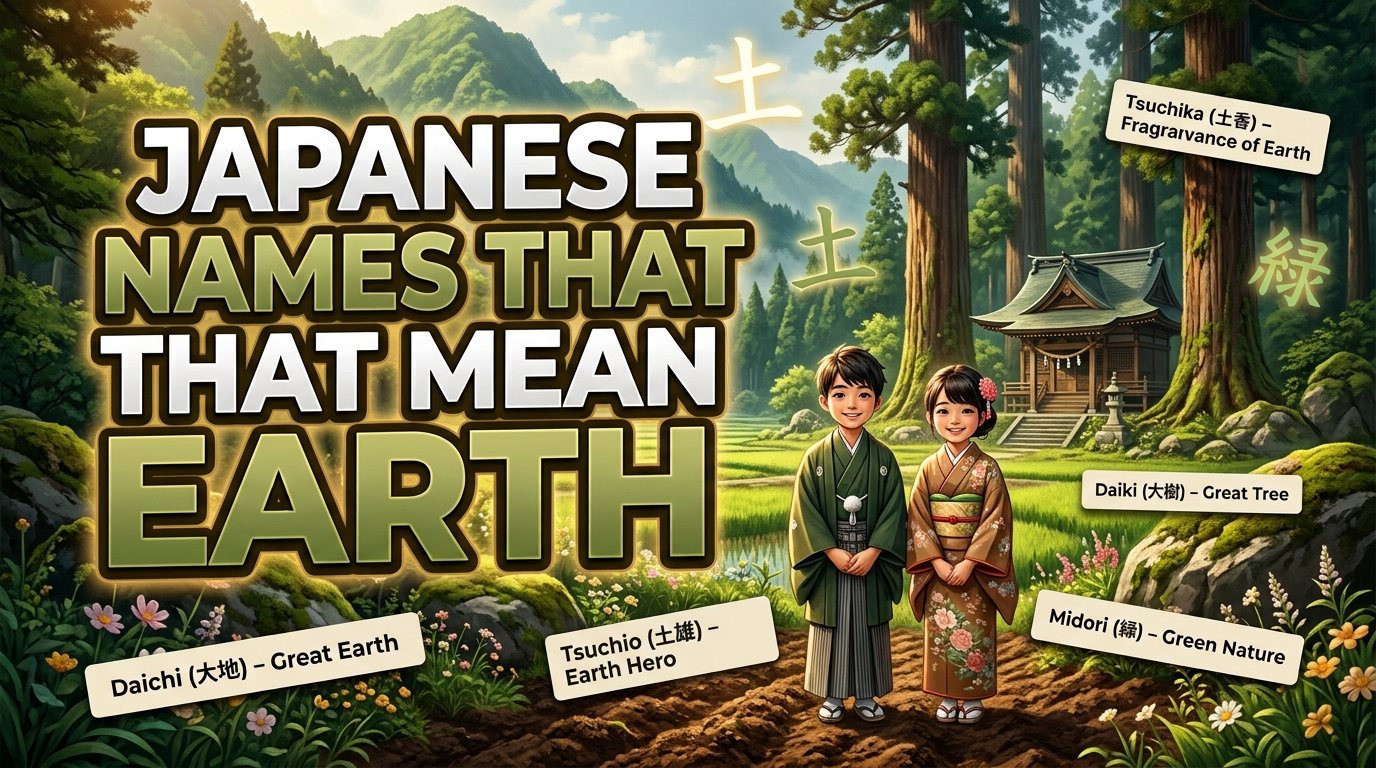
Japanese names that mean earth carry a special kind of beauty. They connect a child to nature. They connect a child to strength. Many parents love this idea. That’s why Japanese names that mean earth are so popular today. They feel grounded. They feel timeless. They also sound lovely in everyday life.
You might be searching for Japanese names that mean earth for your new baby. Or maybe you just love the meaning behind these names. Either way, you’re in the right place. This list of Japanese names that mean earth covers boys, girls, and unisex options. Each name comes with its kanji and true meaning. You’ll find soft names. You’ll find strong names. You’ll find names that simply feel like home. Let’s explore these Japanese names that mean earth together.
What Japanese Names That Mean Earth Symbolize in Culture
In Japanese culture, earth stands for stability, strength, and a deep bond with nature. Names tied to soil, land, or ground often symbolize resilience and groundedness. Parents choose these names hoping their child grows steady, dependable, and deeply rooted, like the earth itself.
Daichi
Meaning: Great earth
Pronunciation: DAH-ee-chee
Script: 大地
Tsuchiko
Meaning: Child of the earth
Pronunciation: TSU-chee-koh
Script: 土子
Kunio
Meaning: Man of the land
Pronunciation: KOO-nee-oh
Script: 国男
Satoko
Meaning: Child of the village land
Pronunciation: SAH-toh-koh
Script: 里子
Riku
Meaning: Land
Pronunciation: REE-koo
Script: 陸
Chiho
Meaning: Earth’s harvest
Pronunciation: CHEE-hoh
Script: 地穂
Iwao
Meaning: Solid rock
Pronunciation: EE-wah-oh
Script: 巌
Nono
Meaning: Fields
Pronunciation: NOH-noh
Script: 野々
Kunihiro
Meaning: Vast land
Pronunciation: KOO-nee-hee-roh
Script: 国広
Riko
Meaning: Child of the land
Pronunciation: REE-koh
Script: 里子
Genya
Meaning: Wild field
Pronunciation: GEN-yah
Script: 原也
Kunika
Meaning: Fragrance of the land
Pronunciation: KOO-nee-kah
Script: 国香
Rikuto
Meaning: Person of the land
Pronunciation: REE-koo-toh
Script: 陸人
Chika
Meaning: Beautiful earth
Pronunciation: CHEE-kah
Script: 地佳
Kunimasa
Meaning: Righteous land
Pronunciation: KOO-nee-mah-sah
Script: 国正
Satomi
Meaning: Beautiful village land
Pronunciation: SAH-toh-mee
Script: 里美
Ishika
Meaning: Stone flower
Pronunciation: EE-shee-kah
Script: 石花
Kunimitsu
Meaning: Light of the land
Pronunciation: KOO-nee-mee-tsu
Script: 国光
Tsuchimi
Meaning: Beautiful earth
Pronunciation: TSU-chee-mee
Script: 土美
Rikuya
Meaning: Land, calm
Pronunciation: REE-koo-yah
Script: 陸也
Kuninao
Meaning: Honest land
Pronunciation: KOO-nee-nah-oh
Script: 国直
Tsuchino
Meaning: Of the earth
Pronunciation: TSU-chee-noh
Script: 土乃
Rikuo
Meaning: Born of the land
Pronunciation: REE-koo-oh
Script: 陸生
Kunie
Meaning: Blessing of the land
Pronunciation: KOO-nee-eh
Script: 国恵
Iwane
Meaning: Sound of the rock
Pronunciation: EE-wah-neh
Script: 岩音
Genta
Meaning: Great field
Pronunciation: GEN-tah
Script: 原太
Sato
Meaning: Village, land
Pronunciation: SAH-toh
Script: 里
Rikka
Meaning: Land flower
Pronunciation: REEK-kah
Script: 陸花
Kunishige
Meaning: Abundant land
Pronunciation: KOO-nee-shee-geh
Script: 国重
Chiharu
Meaning: Earth’s spring
Pronunciation: CHEE-hah-roo
Script: 地春
Popular Japanese Names That Mean Earth for Boys
Popular Japanese names that mean earth for boys often carry strength and steadiness. Parents pick these names to reflect a solid character and a lasting bond with nature. Below, you’ll find thirty meaningful boy names rooted in earth, land, and stone.
Tsuchio
Meaning: Born of the earth
Pronunciation: TSU-chee-oh
Script: 土生
Ganta
Meaning: Great rock
Pronunciation: GAHN-tah
Script: 岩太
Kunimoto
Meaning: Foundation of the land
Pronunciation: KOO-nee-moh-toh
Script: 国基
Rikichi
Meaning: Fortunate land
Pronunciation: REE-kee-chee
Script: 陸吉
Iwaki
Meaning: Rock tree
Pronunciation: EE-wah-kee
Script: 岩樹
Chikashi
Meaning: Earth’s ambition
Pronunciation: CHEE-kah-shee
Script: 地志
Kunitaka
Meaning: Noble land
Pronunciation: KOO-nee-tah-kah
Script: 国貴
Ishito
Meaning: Man of stone
Pronunciation: EE-shee-toh
Script: 石人
Kunimichi
Meaning: Path of the land
Pronunciation: KOO-nee-mee-chee
Script: 国道
Tsuchihito
Meaning: Earth’s kindness
Pronunciation: TSU-chee-hee-toh
Script: 土仁
Ganjiro
Meaning: Second son of the rock
Pronunciation: GAHN-jee-roh
Script: 岩次郎
Rikushin
Meaning: True land
Pronunciation: REE-koo-sheen
Script: 陸真
Genshin
Meaning: True field
Pronunciation: GEN-sheen
Script: 原真
Tsuchinori
Meaning: Law of the earth
Pronunciation: TSU-chee-noh-ree
Script: 土典
Ishizo
Meaning: Crafted of stone
Pronunciation: EE-shee-zoh
Script: 石造
Kuniyasu
Meaning: Peaceful land
Pronunciation: KOO-nee-yah-soo
Script: 国安
Rikuji
Meaning: Land governance
Pronunciation: REE-koo-jee
Script: 陸治
Ganki
Meaning: Noble rock
Pronunciation: GAHN-kee
Script: 岩貴
Tochimaru
Meaning: Earth, perfection
Pronunciation: TOH-chee-mah-roo
Script: 土丸
Chikanori
Meaning: Earth’s principle
Pronunciation: CHEE-kah-noh-ree
Script: 地則
Kunishiro
Meaning: Land’s generation
Pronunciation: KOO-nee-shee-roh
Script: 国代
Ishimaru
Meaning: Stone, perfection
Pronunciation: EE-shee-mah-roo
Script: 石丸
Genkichi
Meaning: Fortunate field
Pronunciation: GEN-kee-chee
Script: 原吉
Kunihide
Meaning: Excellent land
Pronunciation: KOO-nee-hee-deh
Script: 国秀
Ishinosuke
Meaning: Helper of stone
Pronunciation: EE-shee-noh-soo-keh
Script: 石之介
Kunisada
Meaning: Land’s decree
Pronunciation: KOO-nee-sah-dah
Script: 国定
Ganemon
Meaning: Guardian of the rock
Pronunciation: GAH-neh-mohn
Script: 岩衛門
Rikutaro
Meaning: Great son of the land
Pronunciation: REE-koo-tah-roh
Script: 陸太郎
Chihei
Meaning: Level ground
Pronunciation: CHEE-heh-ee
Script: 地平
Kunizo
Meaning: Creation of the land
Pronunciation: KOO-nee-zoh
Script: 国造
Beautiful Japanese Names That Mean Earth for Girls
These beautiful Japanese names that mean earth suit girls who carry quiet strength and natural grace. Rooted in soil, land, and nature, each name blends softness with a lasting sense of stability and charm.
Japanese Names That Mean Earth Using the Kanji 地 (Chi)
Japanese names that mean earth using the kanji 地, pronounced “chi,” reflect ground, land, and location. This kanji gives names a grounded and worldly feel, often paired with other characters for deeper meaning.
Chiaki
Meaning: Autumn of the earth
Pronunciation: CHEE-ah-kee
Script: 地秋
Chidai
Meaning: Great earth
Pronunciation: CHEE-dah-ee
Script: 地大
Chimei
Meaning: Bright earth
Pronunciation: CHEE-meh-ee
Script: 地明
Chisei
Meaning: Wisdom of the earth
Pronunciation: CHEE-seh-ee
Script: 地誠
Chiroku
Meaning: Record of the earth
Pronunciation: CHEE-roh-koo
Script: 地録
Chiyu
Meaning: Gentle earth
Pronunciation: CHEE-yoo
Script: 地優
Chizu
Meaning: Earth’s path
Pronunciation: CHEE-zoo
Script: 地図
Chishun
Meaning: Spring of the earth
Pronunciation: CHEE-shoon
Script: 地春
Chiei
Meaning: Prosperous earth
Pronunciation: CHEE-eh-ee
Script: 地栄
Chiba
Meaning: Thousand leaves of earth
Pronunciation: CHEE-bah
Script: 地葉
Chikatsu
Meaning: Victory of the earth
Pronunciation: CHEE-kah-tsu
Script: 地勝
Chimaru
Meaning: Perfect earth
Pronunciation: CHEE-mah-roo
Script: 地丸
Chiharu (Male variant)
Meaning: Clear earth
Pronunciation: CHEE-hah-roo
Script: 地晴
Chisuke
Meaning: Helper of the earth
Pronunciation: CHEE-soo-keh
Script: 地助
Chikuni
Meaning: Earth’s homeland
Pronunciation: CHEE-koo-nee
Script: 地国
Chiraku
Meaning: Comfort of the earth
Pronunciation: CHEE-rah-koo
Script: 地楽
Chitatsu
Meaning: Accomplished earth
Pronunciation: CHEE-tah-tsu
Script: 地達
Chihana
Meaning: Flower of the earth
Pronunciation: CHEE-hah-nah
Script: 地花
Chiryo
Meaning: Cool earth
Pronunciation: CHEE-ryoh
Script: 地涼
Chikiyo
Meaning: Pure earth
Pronunciation: CHEE-kee-yoh
Script: 地清
Chinao
Meaning: Honest earth
Pronunciation: CHEE-nah-oh
Script: 地直
Chimasa
Meaning: Righteous earth
Pronunciation: CHEE-mah-sah
Script: 地正
Chisada
Meaning: Decree of the earth
Pronunciation: CHEE-sah-dah
Script: 地定
Chikane
Meaning: Bell of the earth
Pronunciation: CHEE-kah-neh
Script: 地鐘
Chiyori
Meaning: Trust of the earth
Pronunciation: CHEE-yoh-ree
Script: 地頼
Chisora
Meaning: Earth and sky
Pronunciation: CHEE-soh-rah
Script: 地空
Chihide
Meaning: Excellent earth
Pronunciation: CHEE-hee-deh
Script: 地秀
Chinari
Meaning: Earth’s growth
Pronunciation: CHEE-nah-ree
Script: 地成
Chishige
Meaning: Abundant earth
Pronunciation: CHEE-shee-geh
Script: 地重
Chiyasu
Meaning: Peaceful earth
Pronunciation: CHEE-yah-soo
Script: 地安
Japanese Names That Mean Earth Using the Kanji 土 (Tsuchi)
Japanese names that mean earth using the kanji 土, pronounced “tsuchi,” point directly to soil and ground. This kanji carries a raw, elemental feel, giving names a strong tie to the physical earth itself.
Tsuchiaki (Variant)
Meaning: Bright soil
Pronunciation: TSU-chee-ah-kee
Script: 土明
Tsuchidai
Meaning: Great soil
Pronunciation: TSU-chee-dah-ee
Script: 土大
Tsuchimei
Meaning: Bright earth
Pronunciation: TSU-chee-meh-ee
Script: 土明
Tsuchisei
Meaning: Sincere soil
Pronunciation: TSU-chee-seh-ee
Script: 土誠
Tsuchiroku
Meaning: Record of the soil
Pronunciation: TSU-chee-roh-koo
Script: 土録
Tsuchiyu
Meaning: Gentle soil
Pronunciation: TSU-chee-yoo
Script: 土優
Tsuchishun
Meaning: Spring soil
Pronunciation: TSU-chee-shoon
Script: 土春
Tsuchiei
Meaning: Prosperous soil
Pronunciation: TSU-chee-eh-ee
Script: 土栄
Tsuchikatsu
Meaning: Victorious soil
Pronunciation: TSU-chee-kah-tsu
Script: 土勝
Tsuchimaru
Meaning: Perfect soil
Pronunciation: TSU-chee-mah-roo
Script: 土丸
Tsuchisuke
Meaning: Helper of the soil
Pronunciation: TSU-chee-soo-keh
Script: 土助
Tsuchikuni
Meaning: Homeland of soil
Pronunciation: TSU-chee-koo-nee
Script: 土国
Tsuchiraku
Meaning: Comfort of the soil
Pronunciation: TSU-chee-rah-koo
Script: 土楽
Tsuchitatsu
Meaning: Accomplished soil
Pronunciation: TSU-chee-tah-tsu
Script: 土達
Tsuchihana
Meaning: Flower of the soil
Pronunciation: TSU-chee-hah-nah
Script: 土花
Tsuchiryo
Meaning: Cool soil
Pronunciation: TSU-chee-ryoh
Script: 土涼
Tsuchikiyo
Meaning: Pure soil
Pronunciation: TSU-chee-kee-yoh
Script: 土清
Tsuchinao
Meaning: Honest soil
Pronunciation: TSU-chee-nah-oh
Script: 土直
Tsuchimasa
Meaning: Righteous soil
Pronunciation: TSU-chee-mah-sah
Script: 土正
Tsuchisada
Meaning: Decree of the soil
Pronunciation: TSU-chee-sah-dah
Script: 土定
Tsuchikane
Meaning: Bell of the soil
Pronunciation: TSU-chee-kah-neh
Script: 土鐘
Tsuchiyori
Meaning: Trust of the soil
Pronunciation: TSU-chee-yoh-ree
Script: 土頼
Tsuchisora
Meaning: Soil and sky
Pronunciation: TSU-chee-soh-rah
Script: 土空
Tsuchihide
Meaning: Excellent soil
Pronunciation: TSU-chee-hee-deh
Script: 土秀
Tsuchinari
Meaning: Soil’s growth
Pronunciation: TSU-chee-nah-ree
Script: 土成
Tsuchishige
Meaning: Abundant soil
Pronunciation: TSU-chee-shee-geh
Script: 土重
Tsuchiyasu
Meaning: Peaceful soil
Pronunciation: TSU-chee-yah-soo
Script: 土安
Tsuchimune
Meaning: Soil’s purpose
Pronunciation: TSU-chee-moo-neh
Script: 土宗
Tsuchitoshi
Meaning: Wise soil
Pronunciation: TSU-chee-toh-shee
Script: 土敏
Tsuchiharu
Meaning: Clear soil
Pronunciation: TSU-chee-hah-roo
Script: 土晴
Japanese Names That Mean Earth and Nature Together
Common Mistakes to Avoid When Picking Japanese Names That Mean Earth
Choosing Japanese names that mean earth sounds simple, but small errors can change a name’s meaning entirely. From wrong kanji pairings to mispronunciation, here are common mistakes parents make when picking Japanese names that mean earth, along with practical tips to avoid them.
Mixing Up Kanji Readings
Mistake: Assuming 地 and 土 always sound the same in every name.
Tip: Always confirm the reading (chi or tsuchi) with a native speaker or reliable dictionary before finalizing.
Ignoring Kanji Combinations
Mistake: Picking two kanji that clash in meaning or sound awkward together.
Tip: Check how the kanji pair reads as a whole name, not just as separate characters.
Overlooking Gender Associations
Mistake: Choosing a traditionally masculine kanji for a girl without realizing it.
Tip: Research whether the name or kanji leans masculine, feminine, or neutral in modern usage.
Forgetting Stroke Count Superstitions
Mistake: Ignoring traditional numerology tied to kanji stroke counts.
Tip: If tradition matters to you, consult a Japanese naming guide or seimei handan resource.
Choosing Names That Are Hard to Pronounce
Mistake: Picking a name that’s tough for non-Japanese speakers to say correctly.
Tip: Say the name out loud several times, and ask others to try pronouncing it too. This step matters a lot when picking Japanese names that mean earth, since some readings trip up non-native speakers.
Relying Only on Translation Apps
Mistake: Trusting a translation tool for kanji meaning without cultural context.
Tip: Cross-check meanings with native speakers, cultural experts, or trusted naming sites.
Using Outdated or Archaic Kanji
Mistake: Selecting old-fashioned kanji that feel unusual to modern Japanese speakers.
Tip: Look at current baby name trends in Japan to keep the name feeling natural.
Not Considering the Name’s Sound in Other Languages
Mistake: Picking a name that sounds awkward or has unintended meaning elsewhere.
Tip: Test the name against common languages spoken in your community.
Overcomplicating the Name
Mistake: Choosing kanji so rare that even Japanese speakers can’t read it easily.
Tip: Favor kanji that’s common enough to read at a glance, unless uniqueness is your goal.
Ignoring Family Naming Traditions
Mistake: Skipping generational naming patterns some Japanese families follow.
Tip: Ask relatives about family naming customs if you want the name to feel connected.
Choosing Names Without Checking Real-World Usage
Mistake: Assuming a name is common when it’s actually rare or outdated.
Tip: Search Japanese baby name rankings to see how the name is used today. This helps confirm whether the Japanese names that mean earth on your shortlist are still in everyday use.
Forgetting the Name’s Everyday Practicality
Mistake: Picking a beautiful but overly long or complex name for daily use.
Tip: Imagine writing, spelling, and saying the name daily before deciding.
Skipping Cultural Sensitivity
Mistake: Using a Japanese name without understanding its cultural weight.
Tip: Learn the story behind the name so it feels respectful, not just decorative.
Not Verifying Kanji Legality for Registration
Mistake: Choosing kanji that isn’t approved for legal names in Japan.
Tip: If registering the name officially in Japan, check the government’s approved kanji list.
Focusing Only on Meaning, Not Sound
Mistake: Picking a name purely for meaning while ignoring how it flows when spoken.
Tip: Balance both meaning and sound, so the name feels natural. In the end, the best Japanese names that mean earth are the ones that feel effortless to say and carry.
How to Choose Japanese Names That Mean Earth for Your Baby
Picking Japanese names that mean earth for your baby takes more than just liking the sound. It helps to think about meaning, kanji, pronunciation, and how the name will grow with your child. Here’s a simple guide to help you choose with confidence.
1. Start With the Meaning You Want Decide what aspect of “earth” speaks to you most. Do you want strength and stability (like 土, tsuchi), or something broader like land and world (like 地, chi)? Some parents prefer nature-blended meanings, such as earth combined with sky, water, or mountains.
2. Think About Sound and Flow Say the name out loud with your family surname.A name might look beautiful in kanji but feel clunky when spoken. Aim for a name that flows naturally and feels easy to say in daily life.
3. Decide Between Chi and Tsuchi Both kanji mean earth, but they carry slightly different tones. Chi (地) often feels modern and worldly, while Tsuchi (土) feels raw, grounded, and traditional. Choose based on the vibe you want for your child.
4. Balance Meaning With Uniqueness Some Japanese names that mean earth are common, like Daichi or Riku. Others are rare and distinctive, like Chisora or Tsuchimizu. Decide whether you want a name that’s easy to recognize or one that stands out.
5. Check Gender Fit Some earth-related names lean masculine, feminine, or neutral. For example, Kunimi and Chihiro work well for girls, while Kunitaka and Ganta suit boys. Names like Tsuchiaki or Rikushi work beautifully as unisex choices.
6. Consider Kanji Combinations Carefully The same reading can be written with different kanji, each shifting the meaning slightly. Work with a native speaker or naming guide to pick a combination that truly reflects what you want.
7. Think Long-Term A name your child carries for life should feel timeless, not trendy. Classic choices like Daichi, Satomi, or Kunio have stayed popular for generations because they age well.
A Few Names to Consider While Deciding:
Daichi
Meaning: Great earth
Pronunciation: DAH-ee-chee
Script: 大地
Chihiro
Meaning: Vast earth
Pronunciation: CHEE-hee-roh
Script: 千尋
Tsuchiya
Meaning: House of earth
Pronunciation: TSU-chee-yah
Script: 土屋
Riku
Meaning: Land
Pronunciation: REE-koo
Script: 陸
Kunimi
Meaning: View of the land
Pronunciation: KOO-nee-mee
Script: 国美
Choosing Japanese names that mean earth becomes much easier once you know what feeling and meaning you want to pass on to your child. Take your time, say the name out loud, and trust the one that feels right.
Frequently Asked Questions
People searching for these names usually want quick, honest answers. Below, we cover the most common questions readers ask.
1. What is a good Japanese boy name meaning strength and ground?
Daichi is a popular choice. It’s one of the well-loved Japanese names that mean earth, symbolizing greatness and stability.
2. Are there soft, feminine options tied to soil or land?
Yes. Chihiro and Satomi are gentle Japanese names that mean earth, blending grace with a deep natural connection.
3. Can one name work for both boys and girls?
Definitely. Tsuchiaki and Rikushi are flexible Japanese names that mean earth, making them great unisex picks for any child.
4. Which kanji characters are most common for this meaning?
The kanji 地 (chi) and 土 (tsuchi) both appear often. They form the base of many Japanese names that mean earth.
5. Do these names carry any spiritual or cultural weight?
They often do. Earth symbolizes stability and strength, so many Japanese names that mean earth reflect deep-rooted family values.
6. Is it hard to pronounce these kinds of names?
Not really. Most Japanese names that mean earth follow simple phonetic patterns, easy to learn with just a little practice.
7. Where can parents find more options like these?
Baby name books, kanji dictionaries, and cultural naming guides list many more Japanese names that mean earth to explore.
Conclusion
Japanese names that mean earth carry deep beauty and meaning. They connect your child to nature. They show strength and stability. Whether you love Chi or Tsuchi, both bring something special. Japanese names that mean earth work for boys, girls, and unisex choices alike. They feel grounded. They feel timeless. That’s why so many parents love them today.
Take your time picking the right one. Say the name out loud. See how it feels. Japanese names that mean earth aren’t just words, they carry real meaning and history. Choose one that fits your family and your hopes for your child. Whatever you pick, these Japanese names that mean earth will always feel rooted, strong, and full of quiet beauty for years to come.